

Every pill, injection, or inhaler that reaches a patient has passed through one final, non-negotiable gate: batch release testing. This isn’t just paperwork or a box to check. It’s the last line of defense between a patient and a potentially dangerous product. If a batch fails here, it never leaves the facility. No second chances. No exceptions.
What Exactly Happens During Batch Release Testing?
Batch release testing is a full scientific audit of a single production run. Each batch - whether it’s 10,000 tablets or 500 vials of a biologic - must prove it matches its approved profile down to the last decimal point. This isn’t about checking one or two things. It’s a full panel of tests, all validated, all documented, all reviewed.For a simple tablet, that means:
- Identity: Is it the right drug? HPLC or FTIR confirms the chemical fingerprint matches the approved standard.
- Assay: Does it contain the correct amount of active ingredient? The acceptable range is usually 90-110% of the label claim. Anything outside that gets rejected.
- Impurities: Are there any unwanted chemicals? ICH Q3 guidelines set strict limits - like 0.10% for unknown impurities in new drugs. Even trace amounts matter.
- Dissolution: Will it break down properly in the body? For generics, the dissolution profile must match the brand-name drug with an f2 similarity factor of at least 50.
- Hardness and appearance: Tablets must be firm enough to handle but not so hard they won’t dissolve. No cracks, discoloration, or foreign material.
For injectables, the stakes are higher. You need:
- Endotoxin testing: Even tiny amounts of bacterial toxins can cause fever, shock, or death. Limits are as low as 5.0 EU/kg/hr for spinal injections.
- Particulate matter: Every vial is inspected under a microscope. Small volume parenterals can’t have more than 6,000 particles larger than 10 microns per milliliter.
- Microbial limits: Non-sterile products can’t exceed 100 colony-forming units per gram. Sterile products? Zero tolerance.
And then there’s stability. Every batch must be tested under accelerated conditions - 40°C and 75% humidity for six months - to predict how it will hold up over time. Long-term testing runs for up to three years. If the product degrades too fast, the whole batch is scrapped.
Who Signs Off? The Qualified Person (QP)
In the European Union, no batch can leave the facility without a Qualified Person (QP) signing off. This isn’t just any manager. A QP must have at least five years of experience in pharmaceutical manufacturing, plus formal GMP training. They’re legally responsible for the batch’s safety and quality.And they’re in short supply. Europe faces a 32% shortage of QPs, according to EMA’s 2024 report. That means delays. Bottlenecks. Backlogs. One senior QP in Germany told me they spend 40 to 60 hours reviewing a single complex biologic batch. That’s two full workweeks - just for documentation.
In the U.S., there’s no formal QP title, but the role is filled by a designated quality unit representative. The FDA requires two independent analysts to review every test result. One does the test. Another reviews the raw data - the chromatograms, the instrument printouts, the calculations. No shortcuts.
Why Does This Cost So Much - and Take So Long?
Testing a batch isn’t cheap. The average cost has risen 22% since 2020. Why? Because regulators keep raising the bar.Biologics - like monoclonal antibodies - are the toughest. They’re made from living cells. Every batch is slightly different. That means more tests. More validation. More time. A small molecule generic might take 7-10 days to release. A complex generic? 14-21 days. A biologic? 21 to 35 days.
And it’s not just the tests. It’s the paperwork. ICH Q7 and Q6B require 28 to 42 specific data elements per batch. Everything must be stored for at least one year after the expiration date. That’s hundreds of digital files per batch. If a single chromatogram is missing, the whole batch is held.
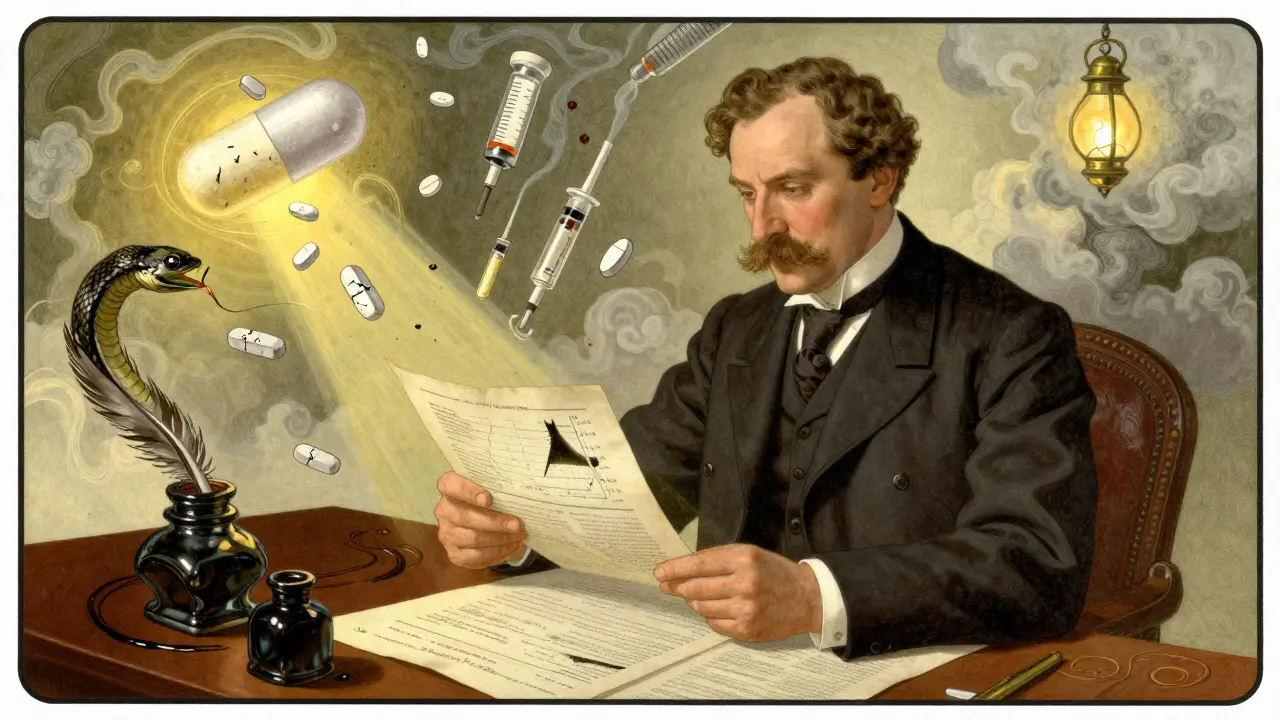
One major manufacturer got an FDA Form 483 in 2023 because their review process didn’t catch a subpotent batch of a monoclonal antibody. 12,000 vials were released. The recall cost $9.2 million. The company was under import alert for 18 months.
What’s Going Wrong? The Real Pain Points
From talking to quality control teams across the industry, three problems keep coming up:- Method transfer failures: A test works perfectly in R&D. When it moves to manufacturing? It fails. 78% of quality analysts on Reddit say this is their biggest delay. It takes an average of 14.7 business days to fix.
- Data integrity issues: Handwritten logs, unverified electronic records, missing timestamps. In 2024, 31% of FDA observations were about data problems. That’s not just sloppy - it’s a regulatory red flag.
- Inadequate deviation investigations: If a test result is out of spec, you don’t just retest. You investigate why. Too often, teams skip the root cause. That’s how bad batches slip through.
One solution? Integrated LIMS systems. Companies using them report 22% faster release cycles. Thermo Fisher’s SampleManager is cited in 41% of those success stories. Automation cuts human error by 63%, according to a 2024 PDA Journal study.
Is There a Better Way? The Future of Batch Release
The industry is changing. New tech is pushing boundaries.AI-driven predictive release testing is one example. Companies using it see 34% fewer batch failures. But here’s the catch: getting regulatory approval for these new methods takes 18 months. Only high-volume products make the ROI worth it.
Then there’s continuous manufacturing - where the product is made in one long, uninterrupted run instead of in batches. The FDA’s 2025 pilot program allows real-time release testing for these facilities. But only 12 companies have qualified so far.
And the rules are shifting. ICH Q14 (effective Nov 2024) lets companies use risk-based testing for established products. That means less testing on mature drugs. USP <1033> became mandatory in January 2025 - now all potency tests must be validated under stricter biological assay standards.
By 2028, the FDA wants blockchain-based traceability for every batch. The EMA requires environmental data to be reviewed within 72 hours of batch completion. China now requires batch release testing for all imported vaccines.
Will batch testing disappear? No. Even McKinsey and Deloitte agree: by 2030, 60% of facilities using advanced manufacturing will shift to continuous quality verification. But for legacy products - which make up most of the market - discrete batch testing will still be the rule through 2035.
As one senior quality director in Brisbane put it: "We’re not trying to eliminate batch testing. We’re trying to make it smarter. Faster. More reliable. But we’ll never skip it. Not when someone’s life is on the line."
What Happens If a Batch Fails?
If a batch fails any test - even one - it’s quarantined. No exceptions.Then the investigation starts. Was it a problem with the raw material? A machine calibration? Human error? A contaminated water line? The root cause must be found and fixed before the next batch is made.
If the failure is isolated and the cause is clear, sometimes a retest is allowed - but only if the original test was proven flawed. Otherwise, the batch is destroyed. No selling. No donating. No "just this once."
And if the batch was already shipped? That’s a recall. The average cost? $10.7 million, according to FDA 2023 data. Plus lost trust. Plus legal risk. Plus reputational damage that can last years.
Final Thought: Why This Matters
Batch release testing isn’t about compliance. It’s about care.Dr. Jane Smith, former director of the FDA’s Center for Drug Evaluation and Research, said in 2023 that batch testing prevented about 1,200 unsafe drug batches from reaching U.S. patients that year alone. That’s 1,200 people who didn’t get sick. 1,200 families who didn’t face a medical crisis.
Every test, every signature, every hour spent reviewing data - it’s not bureaucracy. It’s protection.
When you pick up a bottle of pills, you don’t think about the 30 tests it passed. You don’t see the QP who stayed late to sign off. You don’t know about the LIMS system that flagged a mismatch in the dissolution profile.
But you should. Because someone did. And that’s why you’re safe.
Is batch release testing required by law?
Yes. In the U.S., it’s required under 21 CFR 211.165. In the EU, it’s mandated by Directive 2003/94/EC and EudraLex Volume 4. Every major market - including Canada, Japan, China, and Australia - requires batch release testing before any pharmaceutical product can be sold. Skipping it is illegal and can result in criminal charges.
How long does batch release testing take?
It varies by product. Small molecule generics typically take 7-10 days. Complex generics or inhalers take 14-21 days. Biologics like monoclonal antibodies can take 21-35 days due to more complex testing and longer stability requirements. Delays often come from documentation reviews, method transfers, or regulatory requests for additional data.
What’s the difference between batch release testing and routine quality control?
Routine quality control happens during manufacturing - checking raw materials, in-process samples, or equipment performance. Batch release testing is the final, comprehensive check on the finished product after all manufacturing is complete. It’s the last gate before distribution. All tests must pass before the product can be released.
Can a batch be released without full testing?
Only under very limited conditions. The FDA allows reduced testing for facilities using continuous manufacturing with proven real-time monitoring (PAT). Even then, critical quality attributes must be monitored continuously and validated. For 99% of manufacturers, full batch testing is mandatory. No exceptions.
What happens if a batch fails microbial testing?
The batch is immediately quarantined and destroyed. Microbial contamination can cause serious infections, especially in injectables. Even if the contamination level is low, regulators require destruction - no reprocessing or retesting is allowed. The facility must investigate the source - often a water system, air filter, or personnel breach - and fix it before producing more.
Are there alternatives to traditional batch testing?
Yes, but they’re not replacements yet. Real-time release testing using process analytical technology (PAT) is allowed in continuous manufacturing facilities under FDA pilot programs. AI-driven predictive models can flag potential failures before testing even begins. But these tools still require regulatory approval and validation. Traditional batch testing remains the legal baseline for almost all products.
How do companies reduce batch release time?
Leading companies use integrated LIMS systems to automate data collection and review. They standardize methods across sites to avoid transfer delays. They invest in training for QPs and analysts to reduce human error. Some use risk-based testing under ICH Q14 to cut unnecessary tests on mature products. But the core tests - identity, assay, impurities, sterility - remain unchanged.
12 Comments
So we’re just gonna keep throwing money at this? We’ve got AI that can predict stock markets better than humans, but we’re still micromanaging pill dissolution profiles like it’s 1987? The real failure isn’t the batch-it’s our refusal to evolve.
I just want to say… thank you. 🙏
Every time I take my meds, I think about the people behind the scenes making sure I don’t get poisoned. It’s quiet, it’s tedious, it’s unglamorous-but it’s sacred work. You don’t see it, but it’s there. And it matters.
For anyone wondering why your generic takes 3 weeks to arrive-this is why. I work in QC at a mid-sized pharma plant. We had a batch of metformin fail dissolution because a technician used the wrong solvent in the HPLC prep. One drop. One mistake. 14,000 tablets scrapped. No one got hurt. But it could’ve. That’s why we don’t cut corners.
Just wanted to say I’ve been in pharma QA for 12 years and I’ve never seen a single batch released without full testing… ever. Not once. Not even for a ‘life-saving’ drug. The system’s broken? Maybe. But it’s broken because we’re human-and humans mess up. So we build walls. Not because we’re paranoid. Because we care.
Thank you for writing this with such clarity. I’m a nurse, and I’ve seen what happens when drugs go wrong. I don’t know the science behind it, but I know the consequences. This isn’t bureaucracy. It’s the reason my patients wake up tomorrow.
Ohhh so this is why my insulin took 6 weeks to arrive? 😏
Let me guess-the QP in Germany was reviewing the chromatogram for the 17th time because someone wrote ‘0.10’ instead of ‘0.100’? Classic. We’re not just testing pills here, folks-we’re testing the limits of human patience. And somehow, we still get it right 99.9% of the time. That’s not luck. That’s obsession.
This is the most important thing most people will never think about. Thank you for sharing. I have a brother with epilepsy-he’s on three different meds. I used to think the ‘expensive’ price tag was greed. Now I know it’s the cost of safety. I’m crying a little. In a good way.
It is imperative to underscore that the regulatory frameworks governing batch release testing are not arbitrary constructs, but rather empirically validated safeguards grounded in decades of pharmacovigilance data. The legal and ethical obligations incumbent upon manufacturers are non-negotiable. To suggest otherwise is to endanger public health.
Let’s be real. This whole system is a scam. The FDA and EMA are in bed with Big Pharma. They don’t want you to know that 80% of these tests are just re-running the same data with different software. The ‘failures’? Mostly manufactured to justify price hikes. I’ve seen the logs. They’re rigged.
Blockchain for traceability? AI predictive release? Please. This is all just a distraction. The real story? They’re replacing human QPs with algorithms because they’re cheaper. And guess what? The first time an AI misses a contaminated vial, 50 people die. And then what? They’ll say ‘the system failed’-but no one goes to jail. That’s not progress. That’s negligence dressed up as innovation.
Hey everyone-just wanted to say: if you’ve ever taken a pill, a shot, or inhaled a medicine-you owe a thank you to someone in a lab coat who stayed late to sign off on a spreadsheet. It’s boring. It’s slow. It’s not sexy. But it’s what keeps you alive. So next time you get your prescription, take a second. Say thanks. To the unseen heroes.
Actually, you missed a critical point: ICH Q14 doesn’t just allow risk-based testing-it mandates a Quality Risk Management (QRM) approach, which requires documented justification for test reduction, not just ‘it’s an old drug.’ Also, USP <1058> is the correct reference for analytical procedures-not just ‘USP became mandatory.’ And you forgot to mention that the 2025 FDA pilot for continuous manufacturing requires real-time release testing (RTRT) with 100% in-line monitoring, not just ‘some companies.’