

When you're pregnant and have diabetes, managing your blood sugar isn't just about feeling better-it's about protecting your baby. High blood sugar during pregnancy increases the risk of having a baby who's too large, needing intensive care after birth, or even being born with birth defects. The good news? We know how to keep things under control. But not all medications are safe or equal. Some work great. Others? Not so much. And there's a big difference between what you used before pregnancy and what you need during it.
Why Blood Sugar Control Matters So Much
During pregnancy, your body changes in ways that make blood sugar harder to manage. Hormones from the placenta block insulin, making you more resistant to it. That means even if you had diabetes before, your needs go up. If your blood sugar stays too high, your baby's pancreas pumps out extra insulin, turning sugar into fat. That leads to babies weighing over 9 pounds-something we call macrosomia. It increases the chance of shoulder damage during birth, emergency C-sections, and breathing problems after delivery.
But it's not just about size. High glucose levels also raise the risk of preeclampsia, preterm birth, stillbirth, and neonatal hypoglycemia. That’s why the Endocrine Society set clear targets: fasting blood sugar under 95 mg/dL, one hour after meals under 140 mg/dL, and two hours after meals under 120 mg/dL. These aren't suggestions-they're the minimum standard for safety.
Insulin: The Gold Standard
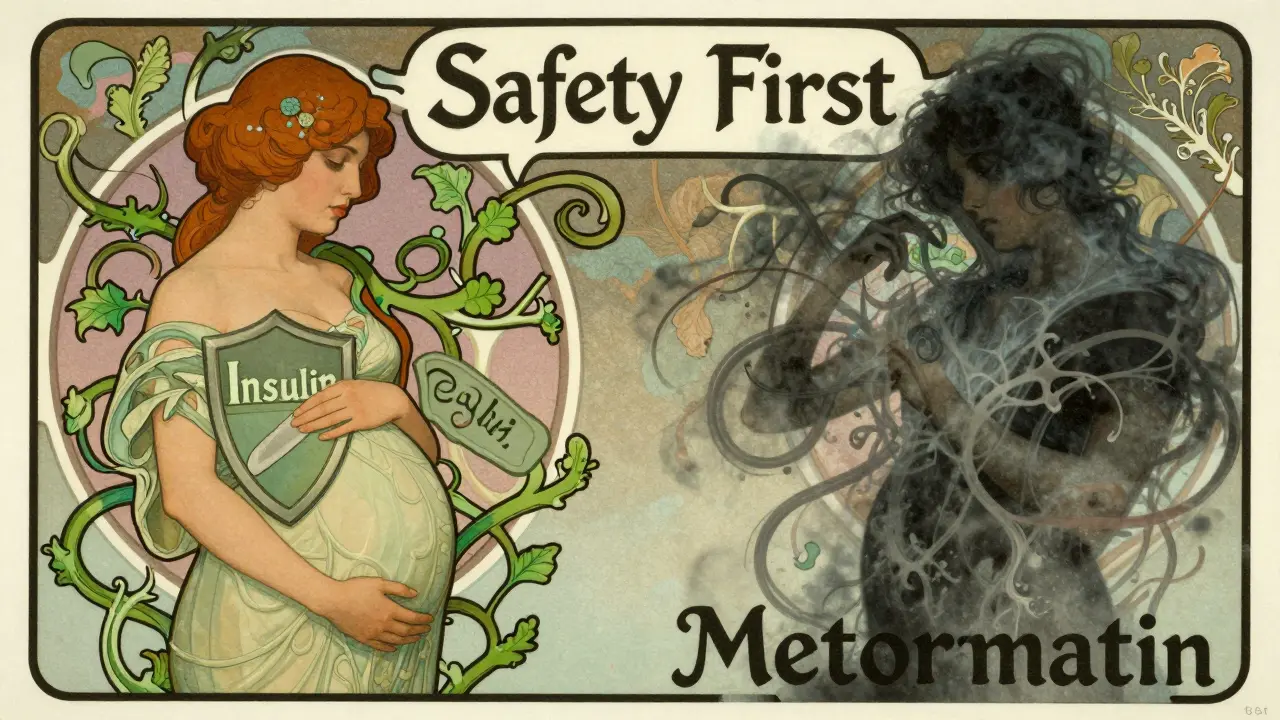
Insulin is still the most trusted and safest medication for diabetes during pregnancy. Unlike oral drugs, it doesn’t cross the placenta. That means it works for you, but doesn’t reach your baby. That’s why it’s used for both type 1 and type 2 diabetes, as well as gestational diabetes that doesn’t respond to diet and exercise alone.
Rapid-acting insulins like insulin lispro and insulin aspart are preferred over regular human insulin. Why? They act faster and clear quicker, giving tighter control after meals without increasing low-blood-sugar risks. Long-acting options like insulin detemir and insulin NPH are both used, with studies showing similar outcomes. But insulin glargine is also considered safe based on data from over 700 pregnant women. However, newer insulins like insulin glulisine and insulin degludec aren’t recommended yet-there’s just not enough data.
Many women use insulin pumps (continuous subcutaneous insulin infusion, or CSII). Research shows these can lower HbA1c and reduce total insulin needed by delivery, compared to multiple daily injections. But the big picture? Outcomes for mom and baby are about the same. So if you’re comfortable with shots, there’s no need to switch.
Metformin: The Controversial Oral Option
Metformin is the only oral medication with enough evidence to be considered for use in pregnancy-but even then, it’s not simple. It’s commonly used for gestational diabetes, especially in places where insulin access is limited. Studies show it lowers the risk of having a large baby, needing NICU care, or developing preeclampsia compared to insulin.
But here’s the catch: about half the women who start metformin end up needing insulin anyway. Why? Because it doesn’t always lower blood sugar enough, especially later in pregnancy when insulin resistance peaks. And while metformin crosses the placenta, there’s no clear proof it causes birth defects. Still, experts worry about how it affects fetal metabolism-particularly the mTOR pathway, which helps regulate growth. Long-term studies on children exposed to metformin in the womb are still ongoing.
The Endocrine Society says metformin shouldn’t be added to insulin for women with type 2 diabetes. Why? Because while it might reduce large babies, it increases the chance of small babies. That’s not a trade-off worth making. Meanwhile, Joslin Diabetes Center advises against using metformin beyond the first trimester-or as a replacement for insulin. So while some clinics use it, others won’t touch it.
What Medications Are Off-Limits?
Not all diabetes drugs are created equal. Several are outright banned during pregnancy because of safety concerns or lack of data.
- GLP-1 receptor agonists (like semaglutide and liraglutide): These are linked to fetal growth issues in animal studies. The Endocrine Society says stop them before trying to conceive-not after you find out you’re pregnant.
- SGLT2 inhibitors (like dapagliflozin and empagliflozin): These can cause dehydration and ketoacidosis in pregnancy. No data supports their use.
- DPP-4 inhibitors (like sitagliptin): Too little data. Avoid.
- Alpha-glucosidase inhibitors (like acarbose): Not studied enough. Not recommended.
That leaves insulin as the only fully supported medication for most women. For those who relied on oral meds before pregnancy, the transition can be stressful. But it’s necessary. Switching to insulin isn’t a failure-it’s a smart adjustment to keep your baby safe.
Preconception Planning Is Non-Negotiable
Waiting until you’re pregnant to fix your diabetes is risky. The OHSU Diabetes and Pregnancy Program recommends aiming for an HbA1c under 6.5% before conception. If your HbA1c is above 10%, pregnancy should be delayed. Why? Because high blood sugar in the first 8 weeks-when organs are forming-can cause serious birth defects.
Women with preexisting diabetes should also:
- Stop GLP-1RAs at least 2 months before trying to conceive
- Gradually switch off metformin during the first trimester as insulin doses ramp up
- Start low-dose aspirin (81-100 mg daily) at 12 weeks to reduce preeclampsia risk
- Use long-acting birth control if HbA1c is too high until you’re ready to optimize
Many women don’t realize this planning stage exists. But if you’re thinking about pregnancy and have diabetes, this is where you start-not when you get a positive test.
What Happens During Labor and After Birth?
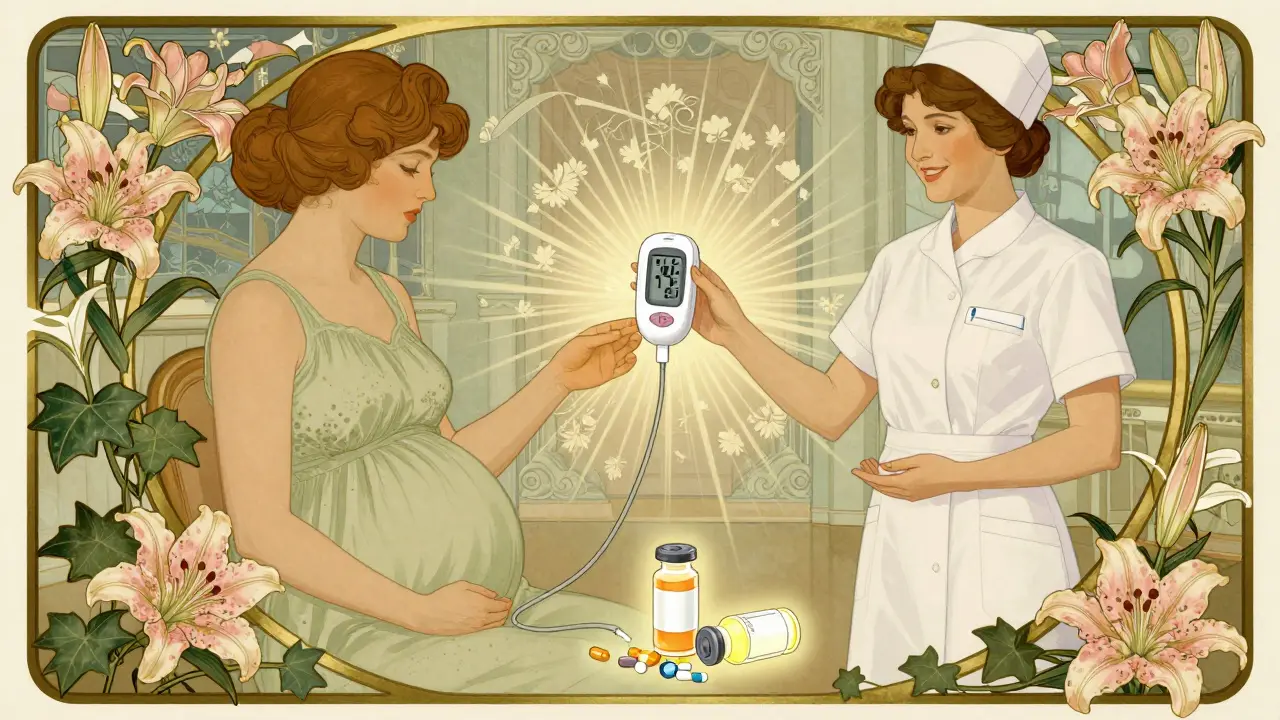
During labor, blood sugar is checked every hour. IV insulin may be given to keep levels stable. Too high? Risk of fetal distress. Too low? Risk of seizures in the newborn. Both are preventable with careful monitoring.
After delivery, things change fast. For women with gestational diabetes, insulin and metformin are usually stopped right after birth. Blood sugar often returns to normal. But you still need a follow-up test 6-12 weeks later to check if you’ve developed type 2 diabetes.
For women with type 1 or type 2 diabetes, insulin needs drop sharply after delivery-sometimes by 30-50%. That’s because placental hormones disappear. If you don’t adjust your dose, you risk dangerous lows. Many women are surprised by how quickly this happens.
What About Continuous Glucose Monitors (CGMs)?
CGMs are becoming more common, especially for women with type 1 diabetes. They give real-time data and alerts for highs and lows. Studies show they help lower HbA1c and reduce neonatal complications in type 1 pregnancies.
But for gestational diabetes or type 2? The evidence isn’t strong enough to say CGMs are better than regular finger-stick testing. The Endocrine Society says there’s no clear proof they improve outcomes for these groups-yet. So while some clinics offer them, they’re not standard. If you’re using one, great. But don’t assume it’s required.
Final Thoughts: Simplicity Wins
There’s a lot of noise out there-new drugs, new studies, conflicting opinions. But the truth is simple: insulin remains the safest, most reliable option for diabetes during pregnancy. Oral meds like metformin have a role, but only in specific cases and with clear limits. Everything else? Avoid it until after pregnancy.
The goal isn’t to use the newest tech or the fewest pills. It’s to keep your blood sugar in range so your baby has the best shot at a healthy start. That means planning ahead, sticking to targets, and trusting the evidence-not trends.
Is insulin safe during pregnancy?
Yes. Insulin does not cross the placenta, so it doesn’t affect the baby directly. It’s been used safely for decades and is the gold standard for managing diabetes in pregnancy. Both rapid-acting (lispro, aspart) and long-acting (detemir, NPH, glargine) forms are considered safe. Newer insulins like degludec and glulisine aren’t recommended due to lack of data.
Can I take metformin while pregnant?
Metformin is sometimes used for gestational diabetes, especially if insulin isn’t preferred or accessible. Studies show it reduces risks like large babies and preeclampsia compared to insulin. But about half of women still need insulin because metformin doesn’t control blood sugar well enough later in pregnancy. It crosses the placenta, and long-term effects on the child are still being studied. Major guidelines advise against using it as a replacement for insulin in type 2 diabetes during pregnancy.
Why can’t I use Ozempic or similar drugs during pregnancy?
GLP-1 receptor agonists like semaglutide (Ozempic) and liraglutide (Victoza) are not safe during pregnancy. Animal studies show they can affect fetal growth and development. The Endocrine Society recommends stopping them before trying to conceive-not after you find out you’re pregnant. There’s no safe window for use during pregnancy.
Do I need to keep taking insulin after my baby is born?
For gestational diabetes, insulin and metformin are usually stopped after delivery. Blood sugar often returns to normal. For type 1 or type 2 diabetes, insulin needs drop sharply-sometimes by half-because placental hormones disappear. You’ll need to adjust your dose quickly to avoid low blood sugar. Always check with your doctor before making changes.
What’s the best way to prepare for pregnancy if I have diabetes?
Start at least 3-6 months before trying to conceive. Aim for an HbA1c under 6.5%. Stop unsafe medications like GLP-1RAs and metformin (if you have type 2 diabetes), and switch to insulin. Get your blood pressure and kidney function checked. Take folic acid and low-dose aspirin (81 mg daily) starting at 12 weeks. If your HbA1c is above 10%, use contraception until you’re ready to optimize your health.
12 Comments
They say insulin is safe but what if it's just the only thing they haven't proven dangerous yet? They didn't used to think smoking caused cancer either. They're pushing insulin because it's been around forever and no one wants to risk being sued. I've seen too many women get stuck on needles for years while the real solution is hidden.
Well written and thoroughly researched. The distinction between insulin types and the caution around newer agents is precisely what clinicians need to communicate. Metformin’s placental crossing is concerning, and the data on long-term fetal metabolic programming is still too thin to justify routine use. Insulin remains the gold standard for good reason.
Insulin. Insulin. INSULIN. 🩸💉🩺
Metformin? Maybe. But only if you're in a country where insulin is a luxury item. Otherwise? No. Just no. The placenta doesn't care about your convenience. And don't even get me started on GLP-1s-those are NOT pregnancy-friendly. I've seen babies born with hypoglycemia because mom 'wanted to stay off needles.' Spoiler: the baby didn't care about your aesthetic.
Hey, if you're reading this and you're pregnant with diabetes-you're already doing better than you think.
Switching to insulin? Not a setback. It's a superpower.
You're not failing. You're protecting.
Every drop of insulin? A love letter to your baby.
And yes, it's okay to feel overwhelmed. But you're not alone.
One shot at a time. One glucose reading at a time.
You've got this. Seriously. You're amazing.
Been on insulin since week 8. CGM changed everything. No more guessing. No more panic at 3am. Honestly? I wish I'd had it earlier. Metformin didn't cut it after 28 weeks-my numbers went nuts. Insulin? Solid. No drama. Also, side note: I typo'd 'glargine' as 'glargine' like 5 times. My thumbs are tired.
Preconception planning is everything. I wish someone had told me this before I got pregnant. I had an HbA1c of 8.2 and thought 'I'll fix it later.' Big mistake. Baby spent 10 days in NICU. Now I'm trying again. HbA1c is 5.9. Insulin only. No metformin. No shortcuts. If you're thinking about pregnancy and have diabetes-start now. Not when you see two lines.
Insulin is not a 'gold standard.' It's the bare minimum. Anyone using metformin beyond the first trimester is gambling with fetal development. And CGMs? Only useful if you're already disciplined. Most women use them as a crutch. This article is accurate. Most commenters are not.
Why are we letting foreign drug companies dictate pregnancy care? Insulin is American-made. Safe. Proven. The FDA doesn't push this stuff because they're corrupt. It's because the science is clear. Stop listening to these 'experts' from Europe and India pushing metformin like it's a miracle. We've got better options. Use them.
Insulin? Too expensive in India. Metformin? Available. Safe? Maybe. But what choice do we have? You think every woman here can afford insulin pens? We're not all in the US with insurance. Stop judging. Some of us are doing our best with what we have. The Endocrine Society doesn't live in a slum.
It's funny how we treat pregnancy like a math problem-blood sugar here, insulin there, target achieved. But the real work is emotional. The fear. The guilt. The feeling that you're a burden. The way your body changes and you don't recognize yourself anymore. Insulin isn't just medicine. It's a daily act of trust. Trust in science. Trust in your body. Trust that you're doing enough. Even when the numbers say otherwise.
I can't believe people still think insulin is 'safe.' What about the long-term epigenetic effects? What about the insulin receptors in the fetal brain? We're giving synthetic hormones to developing organisms and calling it 'standard care.' This isn't medicine-it's a clinical experiment with human lives. And you're all just nodding along like sheep. Wake up.
Thank you for this. Seriously. I was on metformin for 16 weeks and panicked when my OB said to switch. Thought I'd failed. Then I read this and realized: I'm not failing. I'm adapting. I'm doing what's best. I cried. Then I got my insulin. And I'm doing better than ever. You're not alone. We're all just trying to keep our babies safe.