
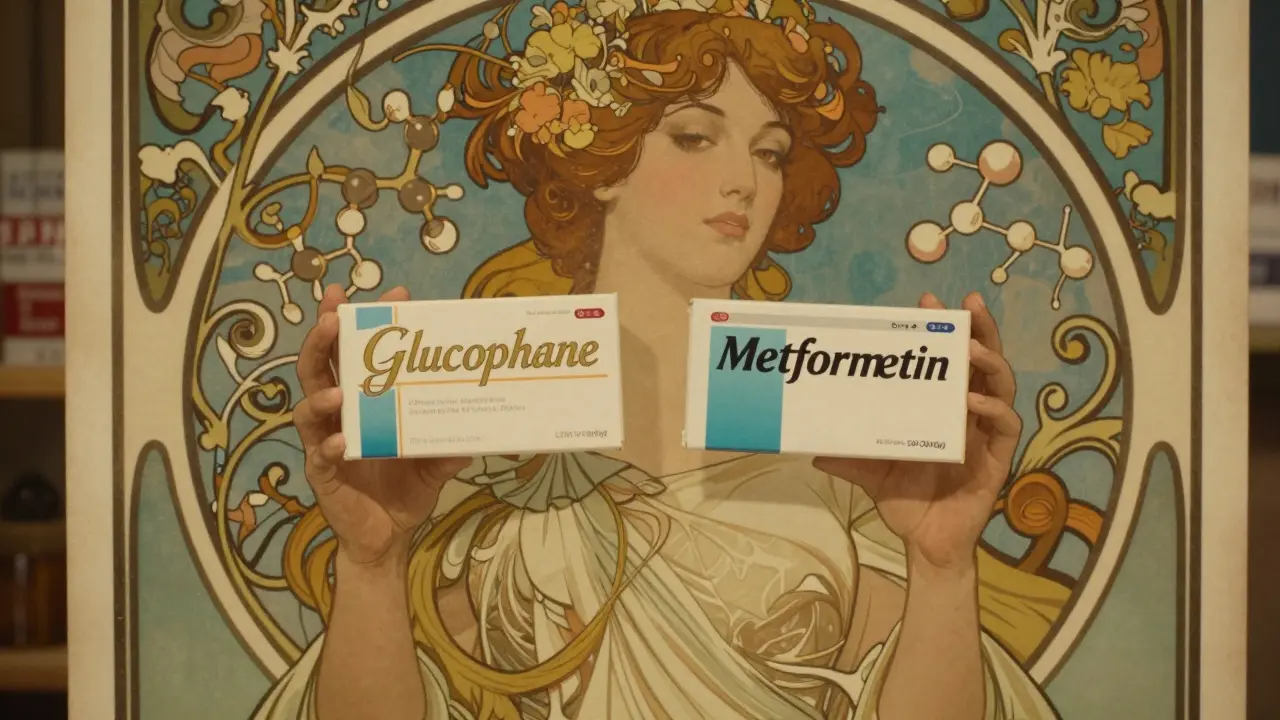
Most people don’t realize that the pill they pick up at the pharmacy for $12 might be the exact same medicine someone else pays $70 for under a different name. That’s the reality of generic drugs versus brand-name drugs. They work the same way. They’re held to the same standards. And yet, the price difference can feel like a scam - until you understand why it exists.
They’re Not Different Drugs - Just Different Labels
A generic drug isn’t a cheaper copy. It’s the same medicine. The FDA requires that generic drugs contain the same active ingredient, in the same strength, same dosage form, and same way of taking it as the brand-name version. If you’re taking metformin for diabetes, whether it’s called Glucophage or just "metformin hydrochloride," your body absorbs it the same way. The FDA calls this "bioequivalence" - meaning the drug enters your bloodstream at the same rate and to the same extent as the brand-name version. The only differences? The color, shape, flavor, or inactive ingredients like fillers or dyes. These changes are required by law so generic versions can’t look identical to the brand. That’s why your blue pill from the brand might be white and oval in its generic form. But the medicine inside? Identical.Why Are Generics So Much Cheaper?
Brand-name drug companies spend years and billions developing a new medicine. They run clinical trials, pay for FDA reviews, market the product, and protect their invention with patents. All that gets baked into the price. Generic manufacturers don’t have to repeat those expensive trials. They only need to prove their version works the same as the brand - which costs a fraction of the price. That’s why generic drugs typically cost 80-85% less. In 2022, the average out-of-pocket cost for a generic prescription was $12.50. The same drug as a brand name? $68.30. That’s not a marketing trick. That’s basic economics. The numbers speak for themselves. Generics make up 90% of all prescriptions filled in the U.S. But they only account for about 25% of total drug spending. Meanwhile, brand-name drugs, which make up just 10% of prescriptions, cost 75% of the total. That gap exists because generics cut out the R&D and advertising overhead.Are Generics Safe? What Does the FDA Say?
The FDA doesn’t treat generics as second-rate. They’re held to the same manufacturing standards as brand-name drugs. Every facility that makes generics - whether in the U.S., India, or elsewhere - gets inspected by the FDA. The same quality controls apply. The same purity rules. The same batch testing. The FDA’s official stance is clear: "Generic drugs are as safe and effective as brand-name drugs." In fact, the same inspectors check both types of facilities. If a brand-name drug plant fails an inspection, it gets shut down. The same happens to generic plants. No exceptions. A 2023 review of over 50 studies by the American Medical Association found no meaningful difference in outcomes between patients taking generics versus brand-name drugs for conditions like high blood pressure, depression, and diabetes. Even for drugs with narrow therapeutic windows - like warfarin or levothyroxine - studies show no significant difference in safety or effectiveness when switching from brand to generic.
When Might You Notice a Difference?
Most people won’t notice anything. But a small number of patients report changes after switching - usually with medications where tiny fluctuations matter. For example, some people taking levothyroxine for thyroid issues or lamotrigine for epilepsy say they feel different after switching to a generic. Here’s the thing: these reports are rare. A Reddit thread with 147 comments found 86% of users saw no difference. Only 14% reported issues. And in many of those cases, the problem wasn’t the generic itself - it was switching back and forth between brands and generics. Even the FDA recommends sticking with one version if you’re on a drug where small changes in blood levels could affect your condition. If you feel different after switching - whether it’s a headache, fatigue, or a change in how your condition is controlled - talk to your doctor. Don’t assume the generic is bad. But don’t ignore your body either. Sometimes, switching back to the brand or staying on one generic version consistently makes all the difference.What Drugs Don’t Have Generics Yet?
Not every brand-name drug has a generic version. About 30% still don’t, mostly because they’re protected by patents or are too complex to copy. Biologics - drugs made from living cells, like insulin or Humira - are especially hard to replicate. Their generic versions are called biosimilars, and they take longer and cost more to develop. Some newer drugs, like certain cancer treatments or rare disease medications, are still under patent. But that’s changing fast. Over 450 brand-name drugs are set to lose patent protection by 2028. That means more generics will hit the market, and prices will drop even further.
How to Make Sure You Get the Right One
Pharmacists are legally required to substitute a generic unless your doctor writes "dispense as written" on the prescription. That’s true in 49 states. So if you don’t want a generic, you have to ask for it - or your doctor has to specify it. Keep a list of your medications, including both brand and generic names. That way, if your prescription switches from one to the other, you’ll know it’s the same medicine. Apps like GoodRx or your pharmacy’s app can help you track this. If you’re on a drug with a narrow therapeutic index - like warfarin, lithium, or seizure meds - ask your doctor if you should stick with one version. Consistency matters more than cost in these cases.What’s Changing in 2026?
The FDA is speeding up generic approvals. Thanks to the Generic Drug User Fee Amendments (GDUFA) III, they aim to review applications in just 10 months by 2027. That’s faster than ever. The Inflation Reduction Act also includes new rules to push more generics to market, especially for high-cost drugs. Supply chains are also improving. After the pandemic exposed how reliant the U.S. is on foreign manufacturing (80% of active ingredients come from India and China), new laws like the CREATES Act are making it harder for brand companies to block generic competition by hoarding samples or delaying approvals.Bottom Line: Generics Work. They Save Money. And They’re Not a Compromise.
Choosing a generic drug isn’t about settling. It’s about making a smart, science-backed decision. For the vast majority of people, generics are just as safe and effective as brand-name drugs - and they cost a fraction of the price. If you’re on a long-term medication - for blood pressure, cholesterol, diabetes, or depression - switching to a generic could save you hundreds a year. That’s money for groceries, gas, or a weekend off. And you won’t lose any effectiveness. The only time to question a switch is if you feel different after changing. Then, talk to your doctor. But don’t let fear of generics keep you paying more than you need to. The evidence is clear: your medicine doesn’t need a fancy name to work.Are generic drugs as effective as brand-name drugs?
Yes. Generic drugs must meet the same FDA standards for safety, strength, quality, purity, and effectiveness as brand-name drugs. They contain the same active ingredient and are proven to deliver it the same way into your bloodstream. Studies involving tens of thousands of patients show no meaningful difference in outcomes for conditions like high blood pressure, diabetes, and depression.
Why do generic drugs look different from brand-name drugs?
U.S. trademark laws prevent generic drugs from looking exactly like brand-name versions. So manufacturers change the color, shape, size, or flavor. But the active ingredient - the part that treats your condition - is identical. The differences are only in the inactive ingredients, like dyes or fillers, which don’t affect how the drug works.
Can I switch from a brand-name drug to a generic safely?
For most people, yes. Over 90% of prescriptions filled in the U.S. are generics, and most patients experience no change in how they feel. However, for drugs with narrow therapeutic indexes - like warfarin, levothyroxine, or seizure medications - your doctor may recommend sticking with one version (either brand or generic) to avoid small variations in blood levels. Always talk to your provider before switching.
Why are some drugs still only available as brand-name?
Some drugs are still under patent protection, which gives the original manufacturer exclusive rights to sell it for up to 20 years. Others, like biologics (e.g., insulin or Humira), are complex molecules that are harder to copy. Their generic versions, called biosimilars, take longer and cost more to develop. About 30% of brand-name drugs don’t yet have generic alternatives, but that number is shrinking as patents expire.
Do pharmacists automatically give me the generic version?
Yes - unless your doctor writes "dispense as written" on the prescription. In 49 states, pharmacists are legally required to substitute a generic if one is available. This is designed to lower costs for patients and the healthcare system. If you prefer the brand name, you need to ask for it or have your doctor specify it on the prescription.
How much money can I save by using generics?
On average, generics cost 80-85% less than brand-name drugs. In 2022, the average out-of-pocket cost for a generic prescription was $12.50, compared to $68.30 for the brand-name version. For long-term medications like blood pressure or cholesterol pills, that adds up to hundreds - sometimes over $1,000 - in annual savings. Since 2017, generic drugs have saved the U.S. healthcare system over $250 billion each year.
Are there any risks with generic drugs?
The risks are the same as with brand-name drugs - and they’re very low. All generics are tested for safety and effectiveness by the FDA. The only potential issue is for patients on narrow therapeutic index drugs who switch back and forth between brands and generics, which can cause small fluctuations in blood levels. For most people, however, generics are just as safe and effective - and significantly cheaper.
9 Comments
Stop paying full price for pills that do the exact same thing. I switched my blood pressure med to generic and saved $90 a month. My doctor was skeptical, but my BP’s never been better. Why pay for branding when the science doesn’t care about the label?
Oh please. You think the FDA inspections are meaningful? Please. Most generic plants are in India with inspectors who get paid in chai and goodwill. The bioequivalence studies? Conducted by the same labs that get paid by the generic manufacturers. It’s not fraud-it’s systemic corruption dressed up as ‘savings.’
There is a profound philosophical truth embedded in this issue: the value we assign to a thing is often divorced from its intrinsic function. A pill is a pill. Its efficacy is not enhanced by a logo, a trademark, or a glossy brochure. Yet we, as a society, have constructed an elaborate mythology around pharmaceutical identity. To choose a generic is not merely an economic decision-it is an act of intellectual liberation from consumerist illusion.
For most meds? Totally fine. But for thyroid meds? Levothyroxine is the classic case where even tiny variations in absorption can throw your whole system off. I switched once and felt like a zombie for three weeks. Went back to Synthroid and was fine. Don’t assume it’s all the same-some people are just more sensitive. Talk to your doc, test your levels, don’t just swap blindly.
wait so you’re saying my anxiety meds are the same as the cheap ones?? but i feel so much worse now?? i think they’re putting poison in the generics to make us buy the expensive ones??
so i switched to generic metformin and honestly? no difference at all. my sugar’s stable, no weird side effects. i used to be scared too but now i just save the cash for coffee and my cat’s fancy treats 😊
bro u think america is the only one doing this?? in nigeria we buy generics and pray they work 😅😂 the FDA? nah we trust the pharmacist who looks like he survived 3 wars
Here’s what they don’t tell you: the inactive ingredients in generics are often cheaper fillers that can trigger allergies or gut issues. I had a rash for months until I traced it to the dye in my generic lisinopril. Brand name? Zero reaction. The FDA doesn’t test for individual sensitivities. They test for ‘average’ people. And guess what? I’m not average.
My grandad’s been on the same generic statin for 12 years. Still alive. Still walking. Still making fun of people who pay extra for the blue pill. He says, ‘If it works, it works. And if it don’t, go see a doctor-not a billboard.’ Wise man.