
Gallbladder Risk Assessment Calculator
This calculator assesses your risk of developing gallbladder issues while taking GLP-1 agonist medications. Based on factors like your age, gender, weight loss rate, and medical history, we'll show you your risk level and provide personalized recommendations.
Click 'Calculate My Risk' to see your personalized risk assessment.
When you start a GLP-1 agonist like Ozempic or Wegovy for weight loss or diabetes, the goal is clear: lose pounds, lower blood sugar, feel better. But what if the very medication helping you feel healthier starts causing sharp, persistent pain under your right ribs? This isn’t just a stomach upset. It could be your gallbladder screaming for attention.
Why GLP-1 Agonists Are Linked to Gallbladder Problems
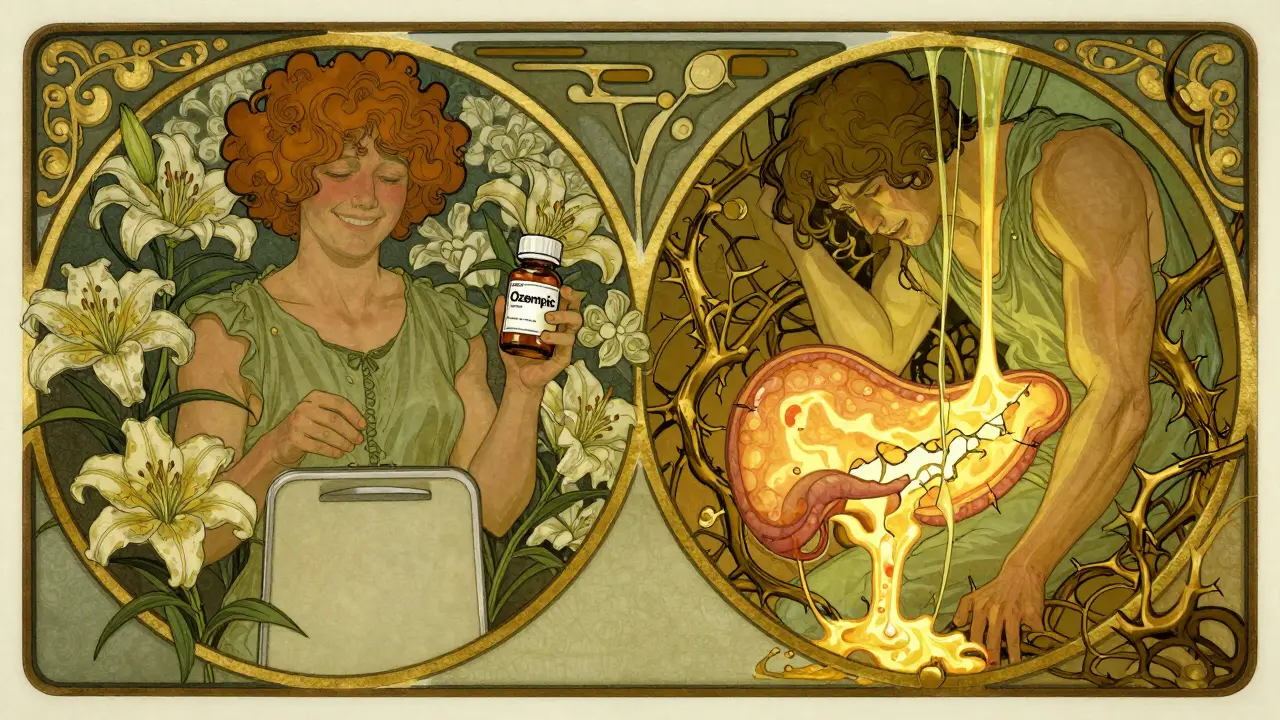
GLP-1 agonists work by slowing digestion and helping your body release insulin more effectively. But there’s a hidden side effect: they also slow down your gallbladder. Normally, when you eat-especially fatty foods-your gallbladder contracts to push bile into your small intestine. That bile helps break down fat. GLP-1 agonists interfere with this process by reducing the release of cholecystokinin, the hormone that tells your gallbladder to squeeze.
When bile sits too long, it thickens. That’s when sludge forms. Sludge turns into stones. And stones can block ducts, trigger infection, and cause severe pain. A major 2022 study in JAMA Internal Medicine tracking over 56,000 people found that those on GLP-1 agonists had a 37% higher risk of gallbladder or biliary disease compared to those not taking them. The risk wasn’t equal across all drugs. Liraglutide had the highest risk, followed closely by semaglutide (the active ingredient in Ozempic and Wegovy). Even more telling: the risk jumped to 1.3% in weight loss trials versus 0.3% in diabetes trials.
That might sound small-but when millions are taking these drugs, small percentages become real people. In 2023 alone, over 45 million prescriptions for GLP-1 agonists were filled in the U.S. Even if only 1% develop gallstones, that’s 450,000 people. And many of them don’t realize the connection until it’s too late.
Red Flags: When Abdominal Pain Isn’t Just Gas
Not every belly ache means gallstones. But if you’re on a GLP-1 agonist and experience any of these, don’t wait. Don’t pop antacids. Don’t assume it’s indigestion. Call your doctor.
- Right upper quadrant pain lasting more than 30 minutes-This is the most common sign of acute cholecystitis. It’s not a cramp. It’s a deep, steady ache or sharp stab just under your ribs on the right side.
- Pain radiating to your right shoulder or back-This isn’t random. It’s called referred pain. When the gallbladder is inflamed, nerves send signals up toward your shoulder. It’s a classic red flag with 82% specificity.
- Pain after eating fatty foods-Pizza, fried chicken, buttered toast, even a spoonful of peanut butter can trigger it. The gallbladder tries to release bile but can’t. The result? Intense, cramping pain that lasts 1 to 5 hours.
- Nausea or vomiting with the pain-This isn’t just a bad stomach bug. The likelihood ratio for gallbladder disease jumps to 3.8 when nausea or vomiting comes with RUQ pain.
- Fever or chills-This means infection is likely. If you have pain plus fever, you could be developing acute cholecystitis or even pancreatitis.
Real patients are reporting these exact patterns. On Reddit, one user wrote: “Started Wegovy six months ago. Lost 30 pounds. Then ate tacos. Two hours later, I was curled up on the bathroom floor. ER said gallstones. Needed surgery within 48 hours.” That story isn’t rare. In one analysis of 1,243 patient forum posts, nearly 4% described pain patterns matching biliary colic.
Who’s Most at Risk?
Not everyone on GLP-1 agonists will get gallstones. But some people are walking into a storm.
Women over 40-Hormones make gallstones more likely. Combine that with rapid weight loss, and the risk multiplies.
BMI over 30-Obesity is already a risk factor for gallstones. Losing weight fast (more than 1.5 kg per week) makes it worse. GLP-1 agonists can cause rapid loss-sometimes 1-2 kg per week. That’s a problem.
History of gallstones or gallbladder disease-If you’ve had them before, your risk of complications jumps. One study found that people with prior gallstones are 4.2 times more likely to have stones move and block ducts when starting these drugs.
Higher doses-Wegovy (2.4 mg semaglutide) carries more risk than Ozempic (0.5-1 mg). The same goes for liraglutide 3.0 mg versus the 1.2 mg used for diabetes. More weight loss = more gallbladder stress.
And here’s something many don’t know: if you’ve already had your gallbladder removed, your risk is extremely low. Without a gallbladder, there’s nowhere for stones to form. Only a tiny risk remains if residual stones are stuck in the bile ducts.
What Doctors Should Do-And What You Should Ask
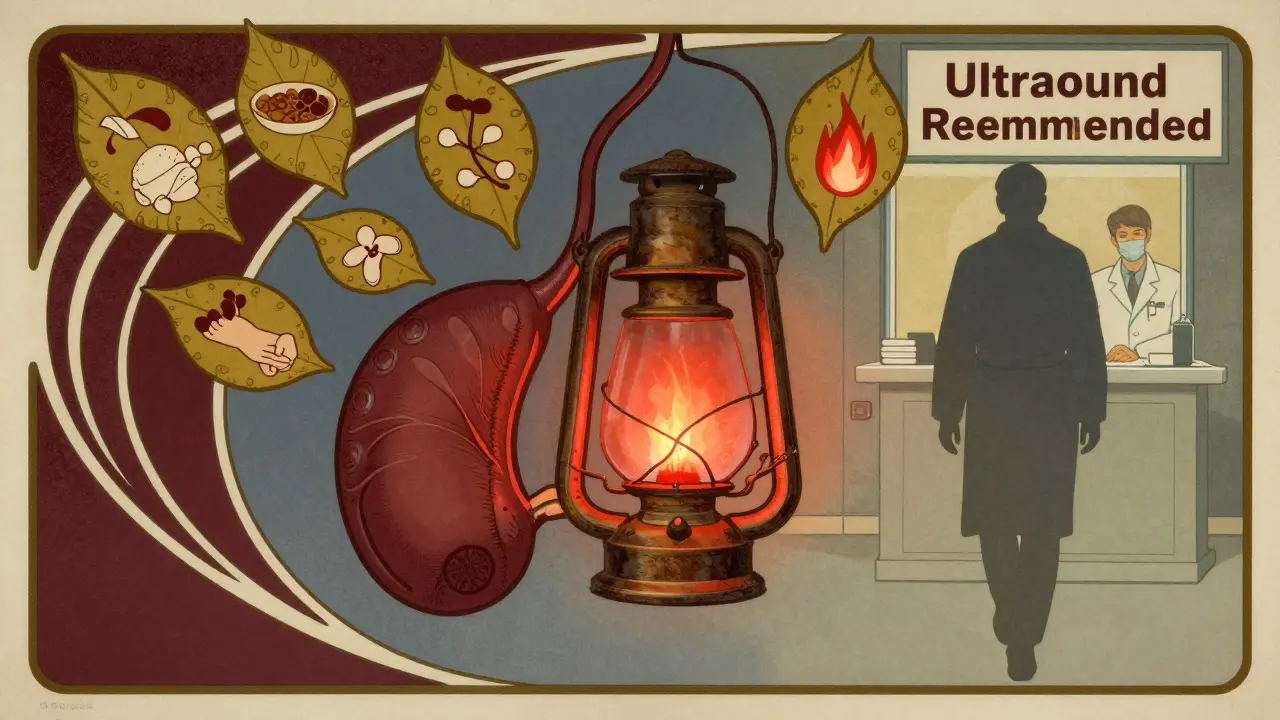
The American Association of Clinical Endocrinology recommends a baseline abdominal ultrasound before starting GLP-1 agonists if you have any risk factors: female, over 40, BMI over 30, rapid weight loss, or past gallstones. Yet, most primary care providers don’t order this. Why? Because they’re focused on weight loss success, not hidden complications.
Ask your doctor: “Should I get an ultrasound before starting this?” If they say no, ask why. If you’ve had gallstones before, insist on a consultation with a gastroenterologist. Don’t let “it’s rare” be your only reassurance.
If you’re already on the drug and start feeling pain, don’t wait. Get an ultrasound within 24-48 hours. Delaying can turn a simple stone into a ruptured gallbladder or pancreatitis. In the 2022 case series, 75% of patients with GLP-1-related cholecystitis needed surgery. Half of them were diagnosed within the first year.
What Happens If You Do Have Gallstones?
If imaging confirms gallstones or inflammation, your doctor will likely stop the GLP-1 agonist. Continuing it while you have active gallbladder disease makes everything worse. Bile flow stays suppressed. Pain stays worse. Recovery takes longer.
Most cases require cholecystectomy-removal of the gallbladder. It’s a common, low-risk surgery today, often done laparoscopically with a same-day discharge. But it’s still surgery. It’s still a disruption. And it’s preventable.
There’s emerging research on prevention. Mayo Clinic is testing whether taking ursodeoxycholic acid (UDCA)-a bile acid that dissolves stones-can reduce gallstone formation in high-risk patients. Early results look promising. But it’s not standard yet. Until then, the best prevention is awareness.
What About Other Weight Loss Drugs?
Not all weight loss medications carry this risk. Orlistat, which blocks fat absorption, has a lower gallbladder risk but causes oily stools and frequent bowel movements. Phentermine-topiramate doesn’t affect gallbladder motility at all. So if you’re at high risk for gallstones, these might be safer alternatives-though they come with their own side effects.
The bottom line: GLP-1 agonists aren’t dangerous for everyone. For many, the benefits-lower heart disease risk, better blood sugar, meaningful weight loss-outweigh the risks. But that doesn’t mean you should ignore warning signs. The key is knowing your risk, watching your body, and acting fast when something feels off.
What You Can Do Right Now
- If you’re starting a GLP-1 agonist and have risk factors (female, over 40, BMI >30, past gallstones), ask for an ultrasound before you begin.
- If you’re already on one, learn the red flags. Write them down. Show them to a family member.
- Don’t ignore pain that lasts more than 30 minutes, especially after eating.
- If you have pain, fever, or vomiting, go to urgent care or the ER-don’t wait until morning.
- If you’ve had your gallbladder removed, you’re mostly safe-but still report any unusual abdominal symptoms.
GLP-1 agonists are powerful tools. But like any tool, they need respect. They’re not magic. They’re medicine. And medicine has trade-offs. The best way to use them safely is not to hope for the best-but to watch for the signs, and act before it becomes an emergency.
14 Comments
So let me get this straight - we’re being sold a miracle drug that makes you lose weight fast, but the fine print says ‘may cause your gallbladder to turn into a ticking time bomb’? And the doctors are too busy high-fiving over BMI numbers to mention it? Classic. We’re not patients; we’re beta testers for Big Pharma’s latest profit scheme.
I started Ozempic last year. Lost 42 lbs. Then one night after pizza (yes, I know, bad idea) - boom. Right side pain like someone was stabbing me with a steak knife. ER said gallstones. Surgery two weeks later. They removed my gallbladder. No more pain. No more Ozempic. I’m not mad - just wish someone had warned me before I ate that damn pizza.
The body speaks in whispers before it screams. We ignore the whispers because we want the result. But the gallbladder doesn't care about your wedding photos in a smaller dress. It just wants to work. Listen before it's too late.
37% higher risk? That’s not a side effect. That’s a product liability waiting to happen. Someone’s going to sue Novo Nordisk into oblivion. And they’ll have every right to. This isn’t medicine - it’s a gamble with your organs.
I’m from a culture where we treat food as medicine - not as something to be chemically blocked. I get why people want to lose weight fast. But when you silence your body’s natural signals with drugs, you’re not healing. You’re just hiding. And the cost? It shows up in ERs later.
GLP-1 agonists = cholelithiasis risk ↑. DUH. Why is this even news? The mechanism’s been known since 2018. If you didn’t know this, you’re not a patient - you’re a marketing target.
As someone who’s had cholecystitis twice - once before, once after starting semaglutide - I can say this: the pain is unlike anything else. It doesn’t go away with antacids. It doesn’t fade with rest. And if you wait, it gets worse. Please - get the ultrasound. Even if your doctor says ‘it’s rare.’ It’s not rare for YOU. And you’re the one in pain.
Look - I lost 50 lbs on Wegovy. Best thing I ever did. But I also got an ultrasound before starting. My doc laughed. Said I was being dramatic. I insisted. Found two small stones. We delayed the drug. I took UDCA for 3 months. Stones dissolved. I started again. No issues. Don’t be scared - be smart. Prevention beats surgery every time.
The data is clear. The risk is quantifiable. The clinical guidelines are available. The failure is systemic. Primary care providers are incentivized to prescribe, not to prevent. This is not an individual failure. It is a structural failure of healthcare delivery. We must demand better.
They’re hiding this because the FDA is owned by Big Pharma. The same people who made you believe statins were safe. The same people who said cigarettes were fine. The same people who said thalidomide wouldn’t cause birth defects. Now they’re selling you a drug that turns your gallbladder into a rock factory - and they call it ‘weight loss.’ Wake up. This is a slow poison with a pretty label.
I’ve been on liraglutide for 18 months. No pain. No issues. But I eat low-fat. I avoid fried stuff. I drink water. Maybe the problem isn’t the drug - it’s the diet people pair it with. If you’re eating burgers and ice cream while on this, of course your gallbladder is gonna revolt.
In Nigeria, we don’t have access to these drugs. But I read this and I think - maybe we’re lucky. Our food is real. Our bodies move. Our pain is understood. Not hidden under a pill. This feels like losing yourself to fix yourself.
They’re doing this on purpose. To make people need surgery. Then they make money off the surgery. Then they sell you a new drug to ‘fix the side effects.’ It’s all a loop. The government knows. The doctors know. But they’re too rich to care.
Per JAMA Internal Medicine, 2022: HR 1.37 (95% CI 1.21–1.55) for biliary events in GLP-1 RA users vs non-users. NNT for prevention via baseline ultrasound in high-risk cohorts is approximately 27. This is not anecdotal. This is epidemiology. Ignoring it is malpractice.