

Specialty medications and injectables are changing how we treat serious diseases - but they’re also breaking the bank. These drugs, used for conditions like cancer, rheumatoid arthritis, and multiple sclerosis, make up just 2% of all prescriptions but account for 50% of total pharmacy spending. In 2022, the U.S. spent over $200 billion on them. And that number is climbing. By 2027, it could hit $350 billion. For employers, that’s an average of $34.50 per employee, per month, just on these drugs. If you’re managing a health plan - whether for a company, union, or government program - you can’t afford to ignore this.
Start with Formulary Management
One of the most effective ways to cut costs is by tightening your drug list. Not all specialty drugs are created equal. Some work just as well as others but cost a fraction of the price. Formulary management means setting rules that guide prescribers toward the most cost-effective options without sacrificing outcomes. For example, a prior authorization requirement can stop a doctor from prescribing a $12,000-a-month drug when a $4,000 alternative exists. A study by Excellus BlueCross BlueShield showed that applying these rules to GLP-1 weight loss drugs saved $13.64 per member, per month. That’s over $160 per year per person. Multiply that across thousands of members, and you’re talking millions. But there’s a catch. If you make the rules too strict, patients can’t get the meds they need. The key is balance. Use clinical guidelines backed by data - not just cost. Work with your Pharmacy and Therapeutics committee to review which drugs have proven results. And don’t just block access - offer support. A good prior authorization system includes case managers who help patients navigate the process. That’s how you reduce both cost and frustration.Narrow Your Pharmacy Network
You probably don’t realize how much you’re paying just because your plan lets members use any specialty pharmacy. Most plans give patients a choice - CVS, Express Scripts, Walgreens, or dozens of others. But that freedom comes at a price. Each pharmacy negotiates its own rate. Some charge 30% more than others for the exact same drug. By narrowing your network to just two or three high-performing specialty pharmacies, you can cut costs by 10-15%. CarelonRx found that employers who limited their network saved $1.37 per member, per month. That might sound small, but for a plan with 100,000 members, that’s $1.37 million a year. The trick is choosing wisely. Don’t just pick the cheapest. Look for pharmacies with strong clinical support: nurses who call patients to explain how to use injectables, pharmacists who check for interactions, and 24/7 access to help. One study found patients using preferred networks rated their support at 8.7 out of 10 - compared to 7.2 for others. Better care means better adherence. And better adherence means fewer hospital visits and lower overall costs.Switch to Biosimilars
Biosimilars are the closest thing to a magic bullet in specialty drug cost control. They’re not generics - they’re highly similar versions of complex biologic drugs. Think of them as clones: same active ingredients, same effectiveness, but 50% cheaper on average. The FDA has approved 42 biosimilars as of late 2023. Yet adoption is still under 30% in most therapeutic areas. Why? Doctors are hesitant. Patients are confused. Manufacturers still push the original brand. But the numbers don’t lie. Hospitals that switched to biosimilars for rheumatoid arthritis drugs saw 20-30% cost reductions. Quantum Health found that replacing one biologic with its biosimilar saved $180 billion industry-wide over five years. That’s not a guess - it’s a projection based on real-world data. To make this work, you need education. Run sessions for prescribers. Give patients clear materials. Use your pharmacy network to promote biosimilars. Some plans now require patients to try the biosimilar first - unless there’s a medical reason not to. That’s called step therapy. And when done right, it works.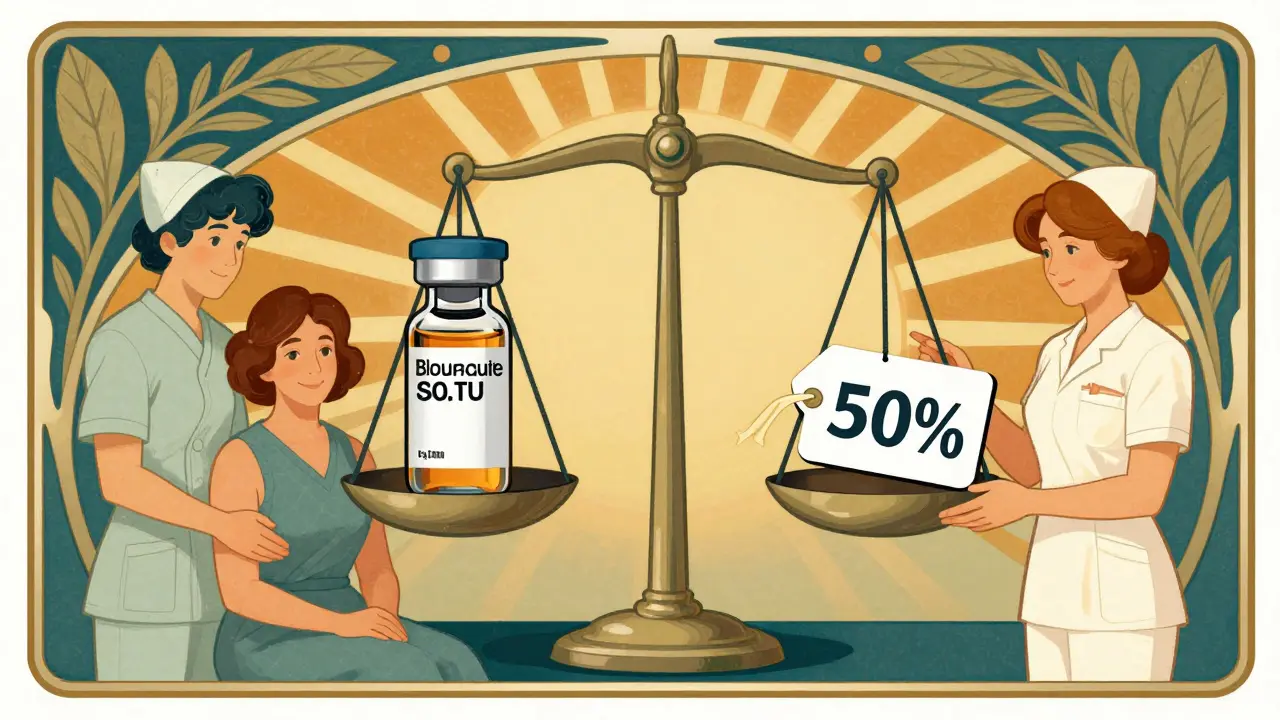
Move Injections Out of Hospitals
Here’s something most people don’t know: nearly half of all specialty injectables don’t need to be given in a hospital. Yet, that’s where they often are - because it’s easier for the doctor, or because the patient’s insurance doesn’t cover home administration. Quantum Health analyzed 220 specialty drugs and found that 91% of cases could safely be moved to a doctor’s office, infusion center, or even the patient’s home. The result? A 48% drop in cost per dose. Why? Hospitals charge way more for the same service. A Humira injection in a hospital outpatient department might cost $1,200. The same injection in a clinic? $600. At home with a nurse? $450. The solution? Change your benefit design. Make sure your plan covers home infusion. Partner with home health agencies. Offer incentives for patients to switch. Some plans now pay a flat fee for home administration - no matter the drug. That removes the financial incentive for providers to overuse hospital settings.Use Value-Based Contracts
Traditional drug contracts are broken. You pay full price upfront, then hope the drug works. If it doesn’t, you’re stuck with the bill. Value-based contracting flips that. You pay based on results. If the drug doesn’t lower a patient’s HbA1c, reduce tumor size, or prevent hospitalization, you don’t pay - or you pay less. Prime Therapeutics reported a 45% increase in value-based contracts for specialty drugs in 2023. That’s not a trend - it’s the future. For example, a cancer drug might cost $150,000 per year. With a value-based contract, you pay only if the patient lives six months longer. Or if their disease doesn’t progress. You might pay $100,000 instead - and only if it works. The challenge? It takes time. You need data systems that track outcomes. You need buy-in from manufacturers. But for high-cost drugs with clear clinical endpoints - like those for MS or hepatitis C - it’s worth it. And it’s becoming easier as more vendors offer these models.Maximize Rebates and Copay Assistance
Manufacturers often offer copay coupons to help patients afford their drugs. Sounds good, right? But here’s the catch: those coupons don’t count toward your deductible. So while the patient pays $0, your plan still pays full price. That’s why smart plans use copay maximizers. These programs redirect manufacturer coupons to cover your plan’s portion - not the patient’s. The result? The patient still pays $0. But your plan saves money. CarelonRx found that this strategy cut employer costs by 5-8% annually. For a plan spending $5 million on specialty drugs, that’s $250,000-$400,000 saved. And the patient doesn’t even notice. The key? Work with your pharmacy benefit manager (PBM) to set this up. Make sure your contract requires them to apply coupons to your plan’s share. Don’t assume they’re doing it - check.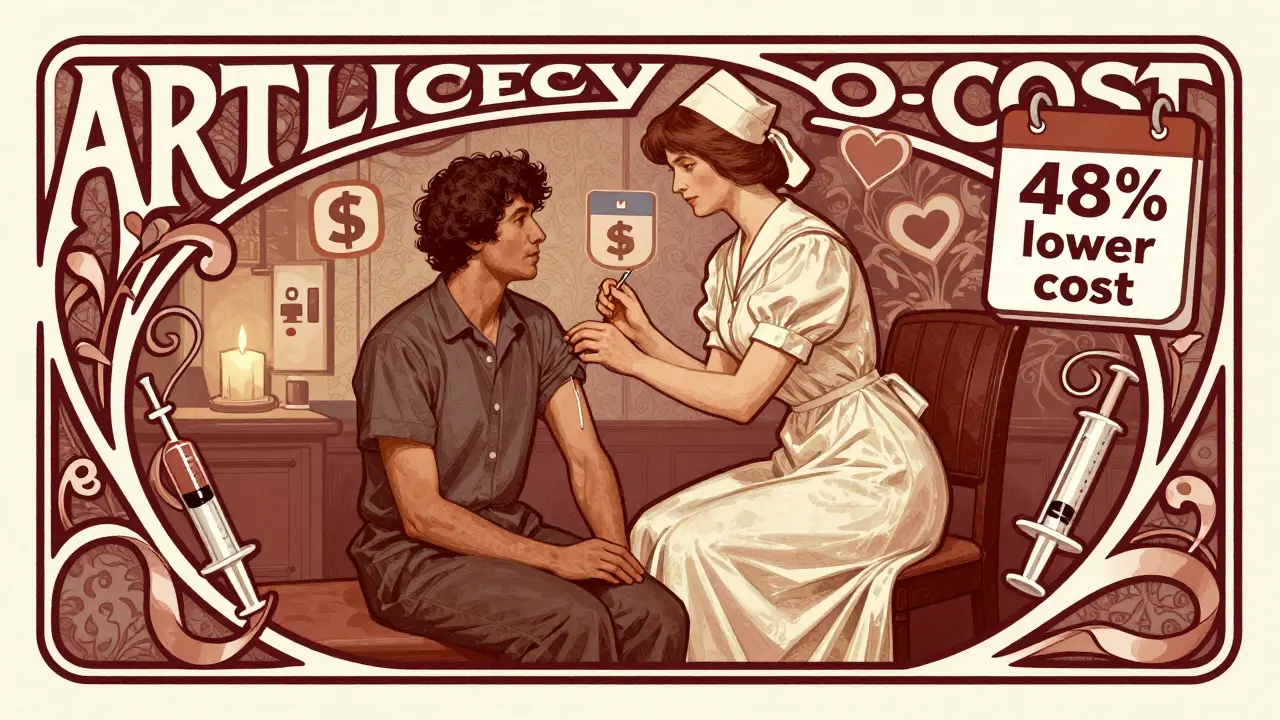
What Doesn’t Work
Not every idea saves money. Some actually make things worse. Raising patient cost-sharing - like increasing copays or deductibles - doesn’t reduce total spending. It just shifts the cost to patients. And when patients skip doses because they can’t afford them, hospitalizations go up. The net effect? Higher costs. Capping out-of-pocket costs sounds fair. But it doesn’t lower the drug’s price. It just limits how much the patient pays. The plan still pays full price. Experts agree: this doesn’t reduce overall spending. Avoid blanket bans on drugs. They create backlash. Patients get angry. Doctors get frustrated. And sometimes, they find ways around the rules - like switching to more expensive alternatives.Implementation Tips
You don’t need to do all of this at once. Start with one or two strategies.- Begin with formulary management and prior authorization - it’s low-risk and high-reward.
- Then, narrow your pharmacy network. It takes 6-9 months to roll out, but the savings are solid.
- After that, push biosimilars. Run educational campaigns. Track adoption rates.
- Finally, explore value-based contracts for your top 5 most expensive drugs.
Final Thoughts
Specialty drugs aren’t going away. They’re saving lives. But they’re also draining resources. The good news? You have more control than you think. The best plans combine formulary rules, narrow networks, biosimilars, treatment setting shifts, and smart contracting. Together, they can cut spending growth from 10-12% per year to just 5-7%. That’s a savings of $45-60 billion industry-wide by 2027. It’s not about cutting care. It’s about cutting waste. And with the right mix of strategies, you can do both.What are specialty medications, and why are they so expensive?
Specialty medications are high-cost drugs used to treat complex, chronic conditions like cancer, multiple sclerosis, and rheumatoid arthritis. They’re expensive because they’re biologics - complex molecules made from living cells - which are hard to produce and require special handling. They also often come with high research and development costs, limited competition, and patent protections that prevent cheaper alternatives from entering the market. A single dose can cost over $1,000, and some treatments run more than $100,000 per year.
Can biosimilars really save money without reducing effectiveness?
Yes. Biosimilars are approved by the FDA as highly similar to their reference biologic drugs, with no clinically meaningful differences in safety, purity, or potency. Studies show they work just as well. The savings come from lower manufacturing costs and increased competition. On average, biosimilars cost 50% less than the original drug. Hospitals that switched to biosimilars for autoimmune diseases saw 20-30% cost reductions with no drop in patient outcomes.
Why can’t patients just use any pharmacy for specialty drugs?
Specialty drugs require special handling - cold storage, nurse support, adherence tracking, and coordination with prescribers. Not all pharmacies offer this. Plans that allow any pharmacy end up paying higher prices because many don’t negotiate discounts. By limiting the network to pharmacies that provide high-quality service and accept lower rates, plans save 10-15% and improve patient care. It’s not about restricting choice - it’s about choosing better options.
How do copay maximizer programs help employers save money?
Manufacturer copay coupons are meant to help patients, but they often just cover the patient’s portion, leaving the plan to pay the full price. Copay maximizers redirect those coupons to pay down the plan’s share instead. This keeps the patient’s out-of-pocket cost at $0 - but reduces what the plan pays. For example, if a drug costs $10,000 and the patient’s coupon covers $5,000, a maximizer ensures that $5,000 goes to the plan’s deductible, not the patient’s. This can save employers 5-8% annually on specialty drug spend.
Is moving injections from hospitals to home settings safe?
Yes, for most drugs. Studies show that 91% of specialty injectables can be safely administered outside hospitals - in clinics, doctor’s offices, or at home with trained nurses. The risk of complications is low, and outcomes are just as good. The biggest barrier is reimbursement: many insurers still pay more for hospital-based infusions. Changing benefit design to incentivize lower-cost settings can reduce costs by 40-50% without affecting care quality.
What’s the ROI for implementing these cost-saving strategies?
Most plans see a return on investment within 12-18 months. Initial setup costs range from $50,000 to $250,000 depending on plan size, but the savings are immediate. For example, a plan with 50,000 members could save $680,000 annually just from narrowing its pharmacy network. Add formulary management and biosimilar adoption, and savings easily exceed $2 million per year. The key is tracking results - and making adjustments based on data.
Will these strategies limit patient access to needed medications?
Not if done right. The goal isn’t to block access - it’s to ensure the right drug is used in the right setting at the right price. Good programs include clinical reviews, exceptions for medical necessity, and patient support services. Employers who use prior authorization with case management report higher patient satisfaction and better adherence than those with no controls. Patients get the care they need - just more efficiently.
8 Comments
It's funny how we treat specialty drugs like sacred texts-untouchable, unchallenged, unquestioned. We act as if the price tag is a divine decree, not a business model. The real tragedy isn't the cost-it's that we've normalized it. We don't ask why a drug that costs $150,000 a year can't be made for $75,000. We don't question why a biosimilar, proven identical by the FDA, is treated like a second-class citizen. This isn't healthcare. It's a rent-seeking carnival where the patients are the clowns and the insurers are the suckers.
The formulary management point is solid. But I’ve seen too many cases where prior auth becomes a bureaucratic maze. Patients wait weeks. Nurses burn out. Doctors rage. And in the meantime, the disease progresses. Cost savings mean nothing if you’re trading health for paperwork. The real win isn’t cutting costs-it’s reducing friction. That’s where the human cost hides.
What struck me most was the home infusion data. A $1,200 hospital injection versus $450 at home? That’s not a cost difference-it’s a moral one. We’ve built a system where convenience is monetized, and patient autonomy is an afterthought. Shifting care to the home isn’t just fiscally smart-it’s philosophically right. People should be able to receive life-sustaining treatment in their pajamas, not in a fluorescent-lit waiting room surrounded by strangers with IVs.
I just want to say… I think you’re right about biosimilars. I’ve been on one for my RA for a year now. No side effects. No flare-ups. My doctor was skeptical at first. But I insisted. And now? I’m saving my plan thousands. And honestly? I feel like a rebel. Like I’m fighting the system by just… taking my medicine. Maybe more people should try. It’s not risky. It’s just… unfamiliar.
Oh wow. So instead of just saying ‘no’ to expensive drugs, we’re going to… *educate* people? And *negotiate*? And *track outcomes*? What is this, 2018? Next you’ll tell us to give patients therapy and a warm blanket. I’m crying. The revolution is… paperwork.
Let’s be real: the real cost isn’t the drug. It’s the silence. The silence from pharma execs who laugh in boardrooms while patients ration insulin. The silence from insurers who pretend they’re powerless. The silence from doctors who don’t challenge the status quo. We’re not facing a pricing crisis. We’re facing a moral one. And no amount of formularies will fix that.
Man, I read this whole thing and all I could think was: why are we still having this conversation? We know what works. We have the data. We’ve got the tech. We’ve got the biosimilars. We’ve got the home infusion models. We just need to stop letting the middlemen-PBMs, hospitals, manufacturers-turn healthcare into a poker game where the house always wins. Just do the damn thing already.
Thank you for writing this. Seriously. As someone who’s had to navigate this mess for my son’s MS meds, I’ve been screaming into the void for years. The fact that we can save millions by doing the right thing-and we still don’t-is heartbreaking. But I’m hopeful. Because people like you are finally talking about it. And that’s the first step. Keep going. We’ve got this.