

Every year, over 1.3 million adverse drug reactions are reported to the FDA through MedWatch. But experts say only about 6% of serious reactions actually make it into the system. That means thousands of dangerous side effects go unnoticed-until someone like you steps in.
What Is MedWatch, Really?
MedWatch isn’t just a website. It’s the FDA’s main early warning system for drug and medical product dangers. Think of it as a national alert network. When a patient has a bad reaction to a medication, a doctor spots a new side effect, or a pharmacy sees the same problem pop up in five different people, MedWatch collects those reports. Those reports help the FDA find hidden risks that didn’t show up in clinical trials.
The system has been around since 1993, but it’s not perfect. It relies on people to speak up. No one is automatically monitoring every prescription filled or every ER visit. If you don’t report it, the FDA might never know.
Who Can Report?
Anyone can report. That includes:
- Doctors, nurses, pharmacists
- Patients and family members
- Manufacturers and hospitals (they’re legally required to)
You don’t need to be a medical expert. If you or someone you know had a scary reaction after taking a drug-even if you’re not sure it was the drug’s fault-report it. The FDA says: “If you’re unsure, report it anyway.”
What Counts as a Reportable Reaction?
You don’t need to prove causation. You just need to describe what happened. The FDA defines a serious adverse reaction as one that leads to:
- Death
- Hospitalization (or prolonging an existing hospital stay)
- Disability or permanent damage
- Birth defects
- A life-threatening condition
- A reaction that requires medical intervention to prevent one of the above
Examples? A healthy 45-year-old gets sudden liver failure after taking a new painkiller. A senior develops severe confusion and falls after starting a new blood pressure med. A teenager has a violent allergic reaction to an OTC antihistamine that wasn’t listed on the label. These all qualify.
Even if the reaction isn’t listed in the drug’s warning label, report it. That’s how new safety warnings get added.
How to Report: The Three Forms
There are three official forms, depending on who you are:
- FDA Form 3500 - For healthcare professionals. It’s detailed, includes medical codes, and can be filled out online.
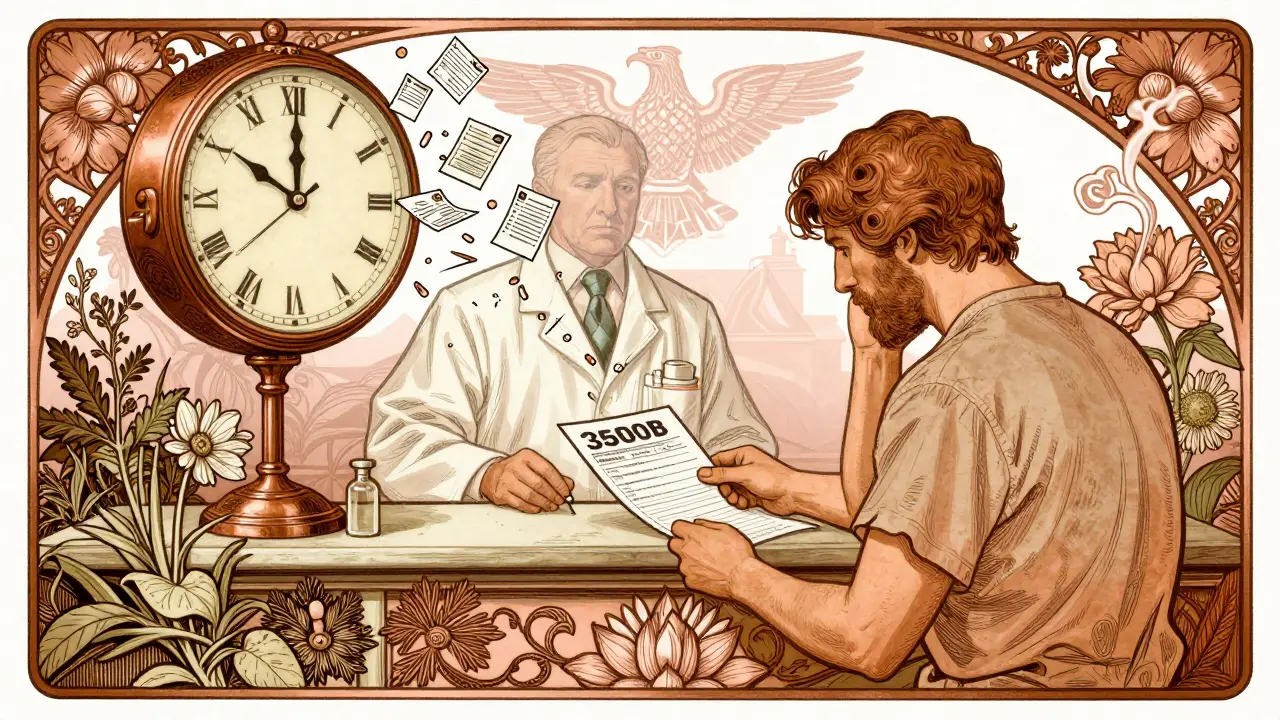
- FDA Form 3500B - For patients and consumers. Plain language. Available in English and Spanish. Takes 15-20 minutes.
- FDA Form 3500A - For manufacturers, importers, and hospitals. Required by law. Must be submitted within 15 days of learning about a serious event.
Most people will use Form 3500B. You can find it at fda.gov/medwatch. No login needed. No account required.
What Information Do You Need?
You don’t need to be a medical record keeper. But having these details handy helps:
- Drug name (brand and generic, if known)
- Dosage and how often it was taken
- When you started and stopped taking it
- When the reaction started (hours? days? weeks?)
- Description of symptoms
- Any hospital visits, lab tests, or treatments
- Other medications or supplements being taken
- Patient’s age and gender (optional, but helpful)
Don’t worry if you don’t have all the details. The FDA knows most patients won’t. Just give what you know. Even a partial report can be valuable.
How Long Does It Take?
For patients: 15 to 20 minutes. Most of that time is just writing down what happened. The online form walks you through each step with simple questions.
For doctors: About the same. Many say it’s easier than filling out an insurance form. One ER nurse in Ohio told me she reports every time she sees a reaction she can’t explain. “It takes less time than writing a prescription,” she said.
What Happens After You Submit?
Nothing. That’s the hard part.
You won’t get a confirmation email. You won’t get a call. You won’t hear back unless the FDA needs more info-which is rare.
That doesn’t mean your report didn’t matter. Your report goes into a database with over 1.3 million others. Analysts look for patterns. If ten people report the same rare heart rhythm issue after taking a new cholesterol drug, the FDA might investigate. That could lead to a safety alert, a label change, or even a recall.
But here’s the truth: 87% of healthcare providers say they’ve never received any feedback after reporting. That’s frustrating. But the system isn’t designed for individual responses. It’s designed for population-level detection.
Why Do So Few People Report?
A 2023 AMA survey found 68% of doctors rarely or never report to MedWatch. Why?
- “I don’t have time.”
- “I’m not sure it was the drug.”
- “It’s not my job.”
- “Nothing ever comes of it.”
But here’s what those doctors don’t realize: if you wait for certainty, you’ll never report. The whole point of MedWatch is to catch signals early-before they become epidemics.
Take the case of Vioxx. It was pulled from the market in 2004 after studies linked it to heart attacks. But doctors had been reporting heart issues for years before that. If more had reported earlier, the FDA might have acted sooner.
How MedWatch Compares to Other Systems
The U.S. isn’t alone. Europe uses EudraVigilance. Canada has the Canada Vigilance Program. But MedWatch is unique because it lets the public report directly.
Manufacturers submit 85% of reports. Patients and providers make up only 15%. That’s a problem. The FDA says the most valuable reports often come from real-world users-not corporate labs.
Also, MedWatch now includes dietary supplements and medical foods. That’s new since 2019. If someone has a bad reaction to a “natural” weight-loss pill, that’s reportable too.

What’s Changing in 2025?
The FDA is trying to fix the underreporting problem. Their “MedWatch Plus” initiative aims to:
- Integrate reporting directly into electronic health records by 2025
- Launch a mobile app for faster reporting
- Send automated reminders to prescribers when a drug has new safety alerts
They’re also testing AI tools to scan reports for patterns faster. Right now, it takes months for analysts to spot trends. In the future, the system might flag issues in days.
But tech won’t fix the biggest problem: people still have to report.
Your Role Matters More Than You Think
MedWatch isn’t a government tool. It’s a community tool. It only works if patients and providers use it.
Think of it like a smoke detector. You don’t wait for the house to burn down before you test it. You test it monthly. You replace the battery. You report the beep.
Same with drug safety. One report won’t change the world. But 100? 1,000? That’s how warnings get added. That’s how drugs get pulled. That’s how someone’s child avoids a dangerous reaction next year.
You don’t need to be a scientist. You don’t need to understand pharmacology. You just need to care enough to say: “This wasn’t right.”
What If I’m Not Sure?
The FDA says: report it anyway.
There’s no penalty for reporting something that turns out to be unrelated. There’s no fine for being wrong. But there’s a real risk in staying silent.
One woman in Texas reported that her 78-year-old husband developed severe tremors after starting a new antidepressant. The drug’s label didn’t mention tremors. The FDA reviewed her report-and 17 others like it. Two months later, they updated the label to include tremors as a possible side effect.
That update saved other seniors from the same reaction.
That’s why you report.
How to Get Started Today
Here’s the simplest path:
- Go to fda.gov/medwatch
- Click “Report a Problem”
- Select “Consumer/Patient”
- Fill out Form 3500B
- Submit
That’s it. No registration. No fee. No follow-up required.
And if you’re a healthcare provider? Use Form 3500. It’s just as easy. And if you work in a pharmacy or clinic, keep a printed copy of Form 3500B on hand. Walk a patient through it while they wait for their prescription. You might save a life.
Adverse drug reactions don’t always make headlines. But they happen every day. And someone has to speak up. Why not you?
14 Comments
Just submitted my first MedWatch report after my mom had that weird rash from the new blood pressure med. Took 17 minutes. No confirmation email. No thanks. Just the quiet satisfaction of knowing I didn’t stay silent.
It is an incontrovertible fact that the current MedWatch infrastructure is a structural failure of public health governance, predicated upon an archaic reliance on voluntary, non-standardized, and emotionally driven reporting mechanisms that lack any semblance of algorithmic validation or longitudinal data correlation. The FDA’s inability to enforce mandatory reporting protocols among outpatient providers constitutes a dereliction of duty under the public trust doctrine, and the absence of real-time feedback loops renders the entire system epistemologically inert.
Form 3500B is the only one most people need. Skip the jargon. Just describe what happened, when, and what drug. No need to diagnose. The FDA’s pharmacovigilance team handles the rest. Even a half-baked report helps build the signal.
I’ve been telling my patients in India to report side effects when they come to the clinic. It’s not just for Americans. These drugs are sold everywhere. If we all speak up, maybe the labels will catch up.
One report won’t change the world. But if 10,000 people do it? That’s how a drug gets pulled. That’s how a kid doesn’t get hospitalized. That’s how your grandma’s name ends up on a safety alert. Do it. Just do it.
Why is this even a thing? If the FDA doesn’t act on these reports, why are we wasting our time? This is just virtue signaling with forms.
I reported my son’s anaphylaxis to an OTC cough syrup. The label didn’t list it. Two months later, they added it. That’s why I do it. Not for me. For the next parent who Googles ‘cough syrup + swelling’.
MedWatch? Yeah, right. The FDA’s just collecting data so they can sell it to Big Pharma later. You think they’re protecting you? Nah. They’re building a database to justify the next drug recall after 300 people die. You’re a data point. Not a person.
So we report… and then what? The system’s broken. It’s like yelling into a void and hoping the void cares. I’m not gonna waste my time on bureaucracy that doesn’t even reply. 🤷♀️
MedWatch isn’t about fixing the system. It’s about refusing to be silent in a system designed to make you feel powerless. Every report is a tiny act of rebellion against the idea that our bodies are just collateral in the drug economy. We’re not users. We’re witnesses. And witnesses matter.
My cousin in Nigeria got sick after taking a supplement bought online. I helped her fill out Form 3500B. She didn’t even know she could report it. This system’s broken, but it’s the only one we’ve got. Better than nothing.
My pharmacist gave me a printed 3500B form when I picked up my antidepressant. Said, ‘If something feels off, fill this out. Even if you’re not sure.’ That’s the kind of care we need more of. Not just in the US. Everywhere.
It is imperative to recognize that the efficacy of MedWatch is directly proportional to the density and fidelity of reports submitted by the lay public. The current 6% capture rate of serious adverse events is not a failure of the system, but rather a reflection of societal apathy toward pharmacovigilance as a civic duty. One must not conflate the absence of feedback with the absence of impact. The system is silent, but not inactive.
Oh, so now you’re saying the FDA is secretly saving lives by ignoring us? That’s rich. Next you’ll tell me the smoke alarm’s working because it didn’t go off.