
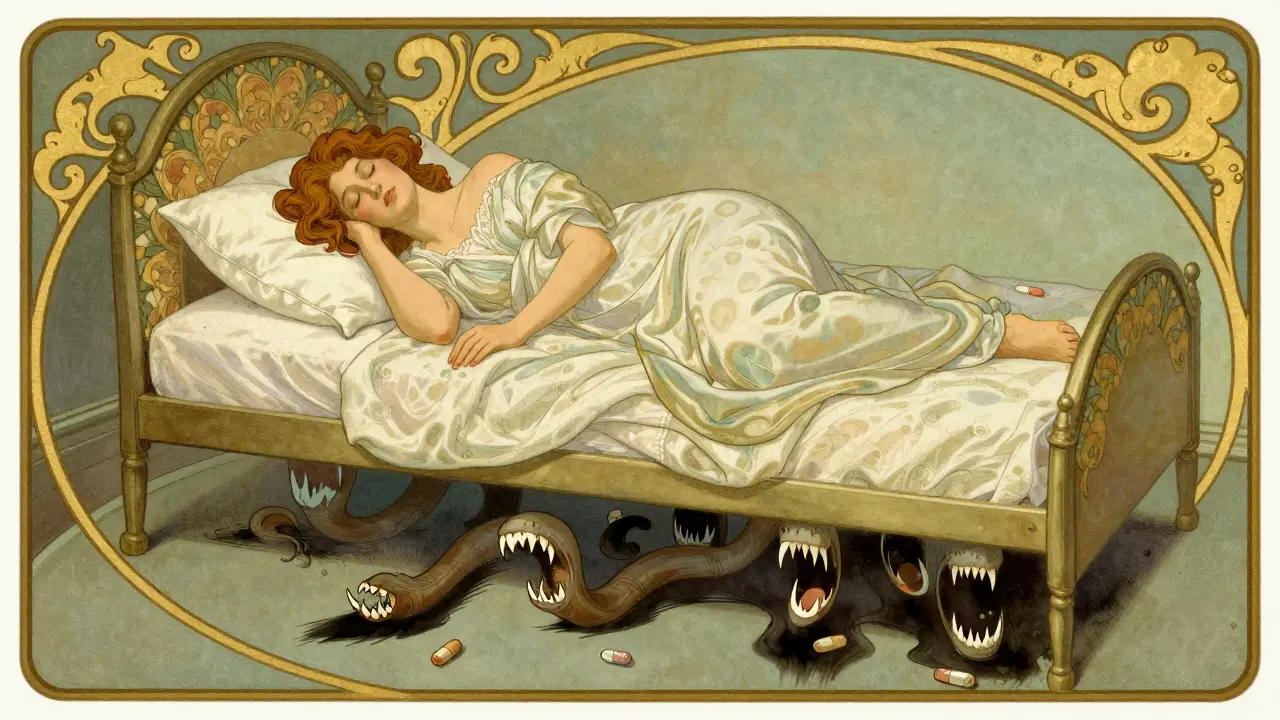
Most people with insomnia reach for a pill first. It’s quick, easy, and promises fast results. But if you’ve been struggling with sleep for more than a few weeks, that pill might be making things worse in the long run. The real solution isn’t in a bottle-it’s in your brain. Cognitive Behavioral Therapy for Insomnia (CBT-I) isn’t just another option. It’s the only treatment backed by decades of research to fix insomnia at its root-and keep you sleeping well for years, even decades.
Why Sleep Medications Don’t Solve Insomnia
Sleep meds like zolpidem (Ambien) work by calming your brain enough to fall asleep. They’re fast. You take one, and within 30 minutes, you’re drowsy. But they don’t fix the problem. They just cover it up. And like any bandage on a broken bone, the damage keeps growing underneath. Within just eight weeks, 42% of people using these medications develop tolerance. That means the same dose stops working. You need more. Then more. And soon, you’re not sleeping better-you’re just avoiding withdrawal symptoms. Morning grogginess, memory lapses, balance issues, and even increased fall risk in older adults are common side effects. The FDA has flagged these risks since 2021, yet prescriptions keep climbing. Worse, when you stop taking them, insomnia often comes back worse than before. Studies show only 32% of people who rely on sleep meds still have improved sleep after a year. That’s not treatment. That’s temporary relief with a price tag.How CBT-I Actually Fixes Insomnia
CBT-I doesn’t try to force sleep. It reteaches your brain how to sleep naturally. Developed in the 1980s, it’s now the gold standard recommended by the American College of Physicians, the American Academy of Sleep Medicine, and every major sleep research group worldwide. It works because insomnia isn’t just about being tired. It’s about fear. Fear that you won’t sleep. Fear that you’ll fail at work. Fear that your body is breaking down. These thoughts create tension. Your brain stays on high alert-even in bed. CBT-I breaks that cycle. The therapy has five core parts:- Sleep Restriction: You spend less time in bed than you think you need. If you’re only sleeping 5 hours a night, you’re only allowed to be in bed for 5 hours. Sounds harsh? It is-but it rebuilds your sleep drive. Within weeks, your brain learns that bed = sleep, not worry.
- Stimulus Control: You only use your bed for sleep and sex. No scrolling, no reading, no watching TV. If you’re awake for more than 20 minutes, you get up and leave the room. This rewires the association between bed and wakefulness.
- Cognitive Restructuring: You challenge thoughts like, “If I don’t sleep 8 hours, I’ll collapse tomorrow.” Research shows patients who complete 80% of these exercises reduce insomnia severity by 62% more than those who don’t.
- Relaxation Training: Simple breathing and muscle relaxation techniques lower your body’s stress response. Polysomnography studies show a 27% drop in physiological hyperarousal after just six weeks.
- Sleep Compression: Once sleep efficiency hits 85%, you slowly add 15-30 minutes back to your time in bed. This keeps progress steady without triggering old habits.
CBT-I vs. Pills: The Numbers Don’t Lie
A 2023 study of over 4,000 people tracked outcomes for six months. Those using digital CBT-I saw a 3.2-point greater improvement on the Insomnia Severity Index than those using sleep meds. That’s not a small difference-it’s the gap between feeling rested and still being exhausted. And the real kicker? After a year, 68% of people who did CBT-I were still sleeping well. Only 32% of those on meds were. Combining both? That’s the strongest option. A 2023 JAMA study found 74% of people using CBT-I plus a short course of medication maintained improvement at six months. But here’s the catch: those who used meds alone? Only 41% stayed improved. CBT-I is the anchor. Meds are just a bridge.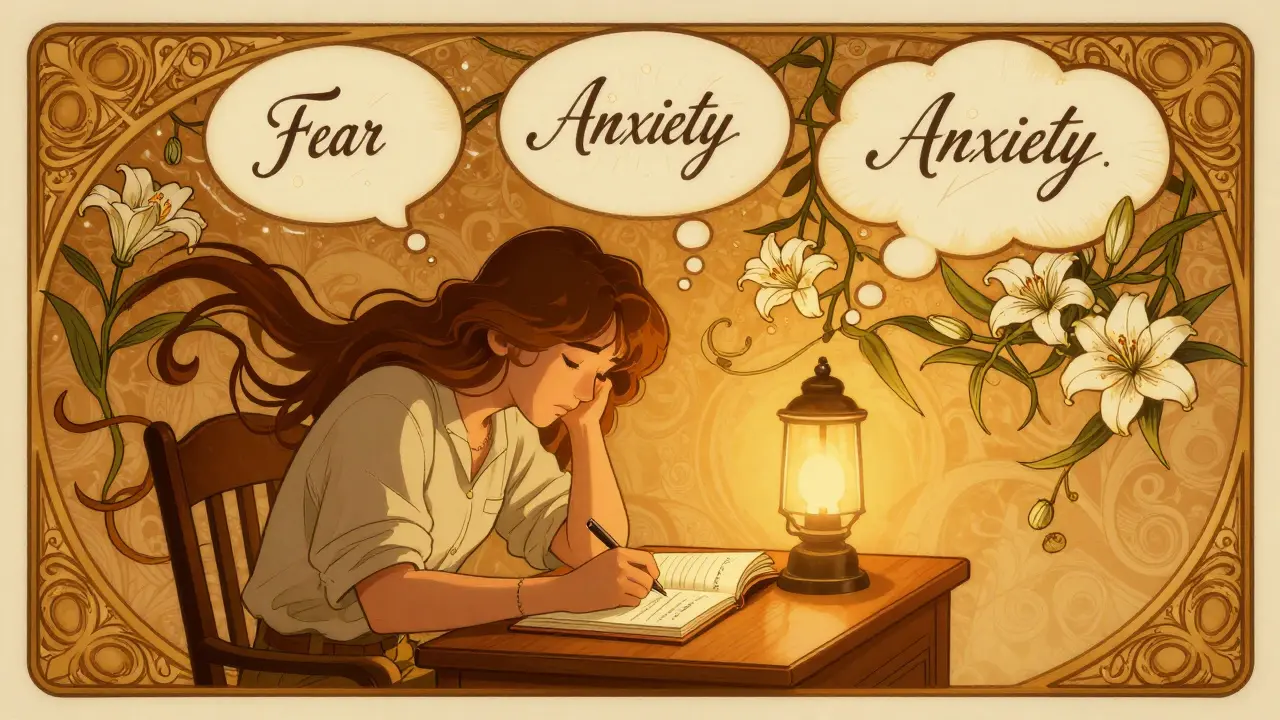
Who Struggles With CBT-I-and Why
CBT-I isn’t magic. It’s hard. The first two weeks of sleep restriction feel brutal. You’re tired. Irritable. Maybe even angry. That’s normal. In fact, 41% of people quit during this phase. But those who stick with it? 78% report “significant improvement.” One Reddit user, u/SleepWarrior89, wrote: “After six weeks of strict sleep restriction, my sleep efficiency jumped from 68% to 92%. The hardest part? Getting up at the same time every day-even on weekends.” Another barrier? Access. Only 15% of U.S. primary care doctors feel trained to deliver CBT-I. And insurance often covers a $15 pill but not a $120 therapy session. That’s changing. Medicare started covering digital CBT-I in 2022. UnitedHealthcare now covers it for 28 million members. Platforms like Sleepio and Somryst are FDA-cleared as prescription digital therapeutics.Digital CBT-I Works-Even for Older Adults
You don’t need to see a therapist in person. Digital CBT-I apps guide you through each step with daily lessons, sleep diaries, and automated feedback. A 2024 study found that 82% of adults aged 65-85 completed digital CBT-I with minimal help. AI-powered versions even adjust your sleep window based on your progress-making it smarter and more personalized. Older adults often benefit the most. They’re more likely to have chronic insomnia and are at higher risk from sleep medication side effects. CBT-I eliminates those risks while improving sleep quality by 45 minutes on average.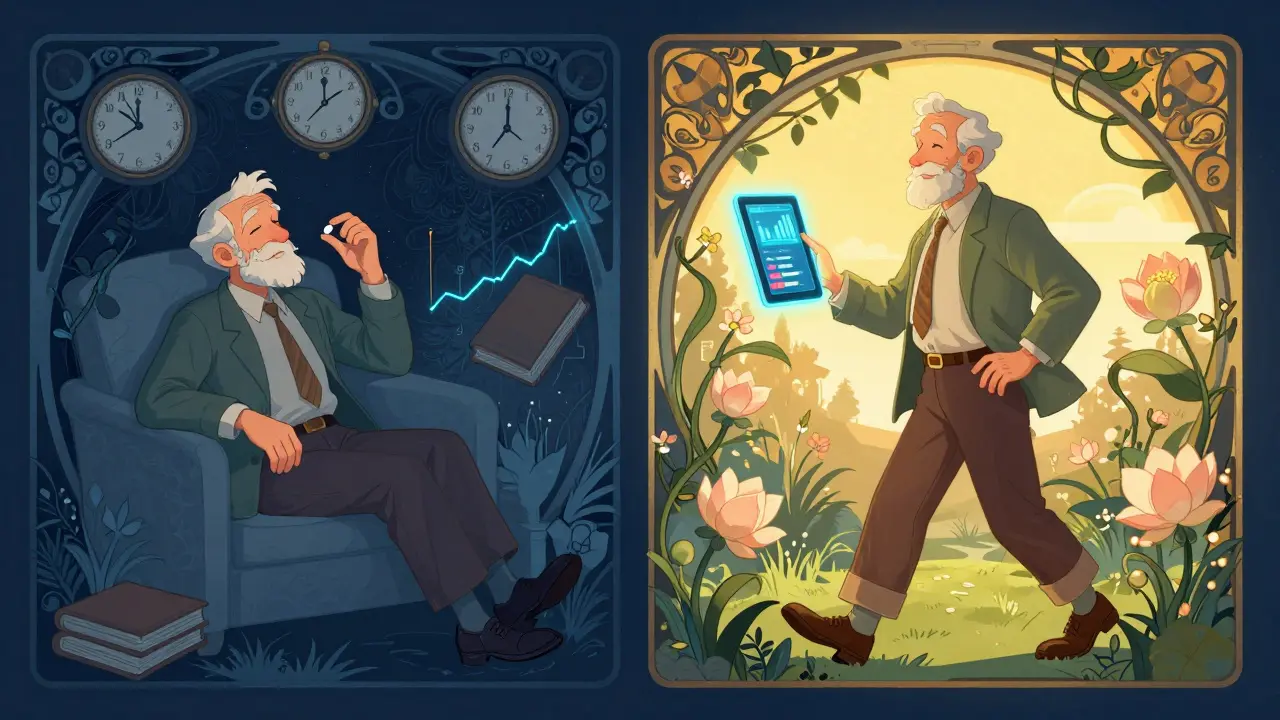
What Happens After You Finish?
The best part? The results last. A 2023 study followed people for over 10 years. Their insomnia severity scores stayed low-down from 18.7 to 8.2. That’s not a temporary fix. That’s a permanent reset. You don’t need to do CBT-I forever. You learn the tools. You use them when needed. And over time, you don’t need them anymore. Your brain remembers how to sleep.Where to Start
If you’ve tried pills and they didn’t work-or if you’re tired of relying on them-CBT-I is your next step. Start with a free resource like the NIH Sleep Education Curriculum. Look for certified providers through the American Board of Sleep Medicine. Or try a digital platform like Sleepio or Somryst, which are now covered by many insurers. Don’t wait for another sleepless night. The science is clear: CBT-I doesn’t just help you sleep. It gives you back your life.Is CBT-I better than sleeping pills for long-term insomnia?
Yes. While sleeping pills work quickly, their effects fade after a few weeks, and many people develop tolerance or dependence. CBT-I addresses the root causes of insomnia-like anxiety, poor sleep habits, and false beliefs about sleep-and leads to lasting improvement. Studies show 68% of people who complete CBT-I still sleep well a year later, compared to just 32% of those who use pills alone.
How long does CBT-I take to work?
Most people see improvements within 2-4 weeks. The most intense phase-sleep restriction-can feel difficult in the first two weeks, but sleep efficiency typically improves by 15-20% by week three. A full course usually lasts 6-8 weeks, with results lasting years after completion.
Can I do CBT-I on my own without a therapist?
Yes. Digital CBT-I programs like Sleepio and Somryst are FDA-cleared and just as effective as in-person therapy for most people. They guide you through each step with daily exercises, sleep tracking, and feedback. Studies show 65-70% completion rates, with 72% of users saying they’d recommend it.
Does CBT-I work for teenagers and older adults?
Yes. Research shows CBT-I is effective across all age groups. In adolescents, it improves sleep onset latency by nearly 30 minutes and adds over 45 minutes of total sleep. In adults over 65, digital CBT-I has a success rate of 82%, even without a therapist. Unlike medications, it carries no risk of falls, memory issues, or dependency.
Why isn’t CBT-I more widely used if it’s so effective?
Two main reasons: lack of trained providers and poor insurance coverage. Only 15% of U.S. primary care doctors feel qualified to deliver CBT-I. Many insurers still favor cheap pills over therapy sessions. But that’s changing. Medicare now covers digital CBT-I, and major insurers are expanding access. As awareness grows, it’s becoming the standard of care.
What if I’ve tried CBT-I before and it didn’t work?
It’s likely you didn’t complete the full protocol. Many people quit during the hardest part-sleep restriction. Others skip cognitive restructuring or don’t track their sleep consistently. Success depends on sticking to the plan. If you tried before and gave up, try again with a digital platform or certified provider. The tools work-if you use them fully.
10 Comments
CBT-I works because it targets the neurological loops that keep insomnia alive. No pills do that. Pills just sedate. This is neuroscience, not magic.
i tried cbt-i for 3 weeks and cried every night because i was so tired
then i took a pill and slept 8 hours straight
who even cares about ‘long-term’ when you’re barely alive right now?
It’s frankly irresponsible to suggest sleep medications are a viable long-term solution. The FDA warnings aren’t suggestions-they’re red flags written in blood. People treat insomnia like a minor inconvenience, not the neurological crisis it is. CBT-I isn’t ‘therapy’-it’s cognitive retraining. You wouldn’t let someone self-prescribe insulin for diabetes, yet you’ll pop Ambien like candy? The disconnect is staggering.
And yet, doctors still prescribe it. Why? Because it’s faster. Because insurance won’t pay for real treatment. Because patients want a quick fix, not a lifestyle overhaul. This isn’t about sleep. It’s about avoidance culture.
CBT-I forces accountability. It makes you face the thoughts you’ve buried under caffeine and melatonin. It’s hard. It’s uncomfortable. And that’s why it works. You don’t ‘get better’ by numbing yourself-you get better by rewiring.
The 68% success rate after a year isn’t a statistic. It’s proof that the brain can heal when given the right tools. The rest? They’re just chasing temporary relief with permanent consequences.
And yes, sleep restriction sucks. You’ll hate it. You’ll resent it. You’ll want to quit. But if you stick with it, you’ll look back and wonder why you ever thought a pill could fix what your mind broke.
This isn’t a ‘treatment.’ It’s a rebirth.
Oh wow, another ‘sleep guru’ preaching CBT-I like it’s the Ten Commandments.
Meanwhile, people with PTSD, chronic pain, or menopause-related insomnia are being told to ‘just retrain their brain’ while their bodies are falling apart.
How noble. How… convenient.
Let me guess-you’ve never spent three nights in a row watching the ceiling because your cortisol is in overdrive, right?
CBT-I is great… if you have the mental bandwidth to do it.
For the rest of us? We need meds. And if you’re too pure to admit that, you’re not helping-you’re gaslighting.
There’s a quiet revolution happening in sleep medicine, and most people don’t even know it’s happening.
For decades, we treated insomnia like a broken lightbulb-replace the bulb, problem solved.
But insomnia isn’t a bulb. It’s a whole electrical system gone wrong-wiring, switches, grounding, all of it.
CBT-I doesn’t replace the bulb. It rewires the entire house.
And yes, it’s hard. The first two weeks feel like you’re being punished for existing.
But here’s the thing: you’re not being punished. You’re being taught.
Every time you get up at 2 a.m. and sit in the living room instead of lying there panicking, you’re sending a message to your brain: ‘Bed is not for worry.’
That’s not therapy. That’s neuroplasticity in action.
And it’s not just for ‘high-functioning’ people. It works for single parents, veterans, shift workers, caregivers-anyone who’s been told they ‘just need to relax.’
Relaxation isn’t the goal. Sleep efficiency is.
And the data doesn’t lie: after a year, the people who stuck with CBT-I aren’t just sleeping-they’re living.
If you’ve tried it and failed? You didn’t fail CBT-I. CBT-I didn’t fail you.
You just didn’t let it finish the job.
Oh look, another ‘science-backed’ post from someone who’s never spent a night awake with a screaming toddler and a full-time job.
CBT-I? Sure, great for people with 401(k)s and therapy budgets.
Try doing sleep restriction when your kid wakes up at 3 a.m. every day.
Or when your boss expects you to be ‘on’ at 6 a.m. after a ‘good night’s sleep’ you didn’t get.
Meanwhile, the guy who wrote this probably sleeps 8 hours with a weighted blanket and lavender oil.
Grow up.
Okay but let’s be real-CBT-I is the only thing that actually made me feel like myself again.
I used to lie in bed for hours thinking, ‘What if I never sleep again?’
And then my brain started believing it.
CBT-I didn’t just fix my sleep-it fixed my fear.
Now I don’t panic when I wake up at 2 a.m.
I just get up, drink water, read a dumb book, and go back to bed when I’m tired.
It sounds simple.
But it’s the most powerful thing I’ve ever done for myself.
And no, I didn’t need a therapist.
I used Sleepio on my phone while eating cereal at 1 a.m.
It worked.
And now I’m not just surviving.
I’m thriving.
Let’s not pretend this is some uniquely American breakthrough. In countries with real healthcare, CBT-I is standard care. Here? We’d rather hand out pills like candy and call it ‘innovation.’
It’s not about efficacy. It’s about profit.
Pharma makes billions off sleep meds.
Who profits from a six-week program you can do on your phone?
Exactly.
And yet, Medicare finally covered it. That’s the only reason it’s getting attention now.
Not because it’s better.
Because it’s cheaper for them.
Thank you for presenting the data clearly and without sensationalism. The distinction between symptom suppression and root-cause resolution is critical, and this post articulates it with precision. The longitudinal outcomes are not just statistically significant-they are clinically transformative. For patients who have endured years of pharmacological dependency, CBT-I represents not merely an alternative, but a restoration of autonomy over one’s own physiology. The resistance to its adoption is not a failure of evidence-it is a failure of system design.
I tried CBT-I for 6 weeks. Quit at week 3 because I was too tired to care.
Now I take a pill every night.
It’s not perfect.
But it’s mine.