
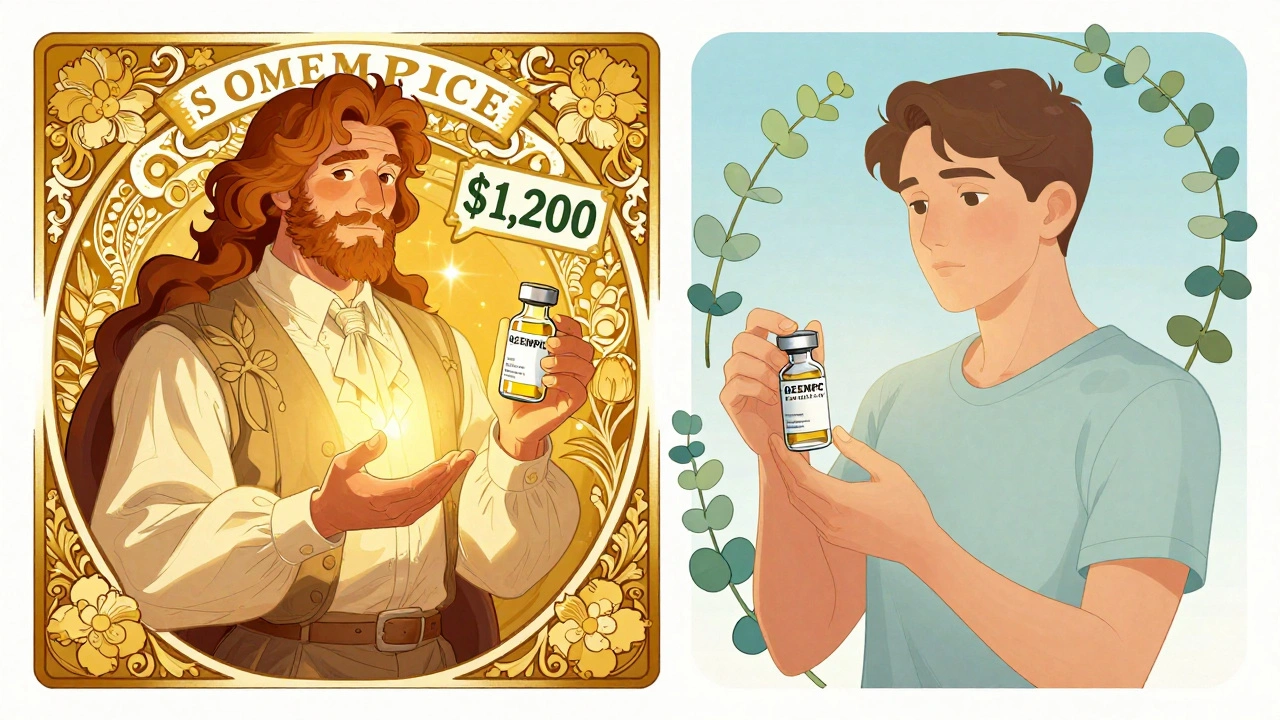
Why does the same pill cost $5 in Australia and $400 in the U.S.? It’s not about quality. It’s not about ingredients. It’s about policy - and the system you’re stuck in.
What You’re Actually Paying for
When you hear that U.S. drug prices are the highest in the world, you might picture someone paying $1,000 for a bottle of insulin. That’s real. But here’s the twist: generic drugs in the U.S. are often cheaper than anywhere else. In fact, they’re 33% less expensive on average than in Canada, Germany, or the UK. So why do people feel ripped off?
The answer lies in what you’re comparing. Most headlines focus on brand-name drugs - the ones with flashy ads and patent protection. These make up just 7% of prescriptions in the U.S., but 80% of spending. Meanwhile, 90% of U.S. prescriptions are filled with generics. In most other countries, generics are only 40% of prescriptions. That means Americans pay less per pill overall - but when they need a brand-name drug like Ozempic or Eliquis, they pay a lot more than anyone else.
Who Pays What? Real Numbers from Real Countries
Let’s look at a few real drugs and what different countries actually pay. In 2023, Medicare negotiated prices for 10 high-cost medications. Here’s how they stacked up against other countries:
- Jardiance (diabetes): U.S. Medicare price = $204. Japan = $52. Australia = $68.
- Eliquis (blood thinner): U.S. = $180. Australia = $51. Germany = $112.
- Stelara (psoriasis): U.S. = $4,490. UK = $2,822. Canada = $3,100.
- Ozempic (weight loss/diabetes): U.S. Medicare price = $1,200/month. Canada = $750. Germany = $850.
Japan consistently has the lowest prices. Australia isn’t far behind. Canada and Germany are usually second-highest after the U.S. But here’s the kicker: even though the U.S. pays more for these drugs, it also pays far less for the generic versions that most people take every day.
Why Do Some Countries Pay So Little?
It’s not magic. It’s control.
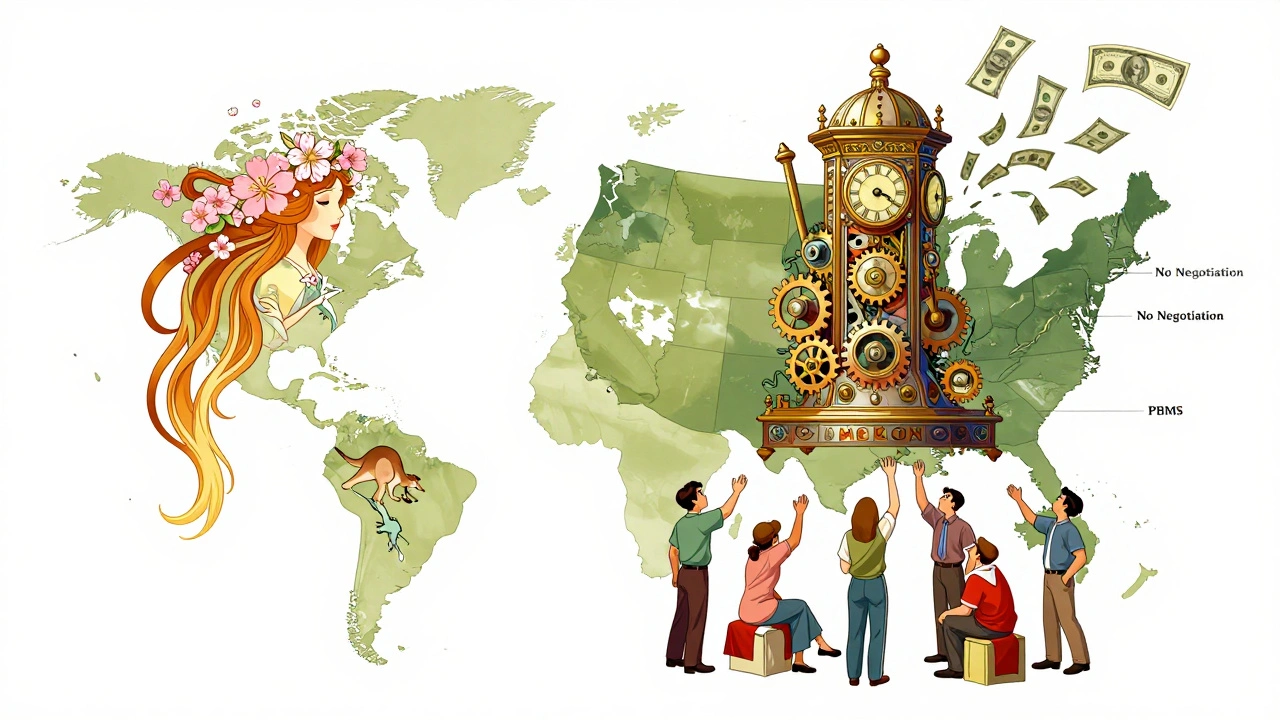
Most developed countries use what’s called external reference pricing. That means they look at what other countries pay and set their own price at or below that level. France, Germany, and the UK compare prices across 10-15 other countries. If the drug costs $100 in Canada and $80 in Australia, they’ll cap it at $80.
Japan does something even more aggressive: they demand price cuts before they’ll even approve a new drug. If the manufacturer won’t lower the price, the drug doesn’t get sold. No negotiation. No exceptions.
In contrast, the U.S. didn’t have a federal price-setting system until the Inflation Reduction Act of 2022. Before that, Medicare was legally barred from negotiating drug prices. Instead, private insurers and pharmacy benefit managers (PBMs) negotiated behind closed doors - and passed the highest prices to seniors on fixed incomes.
The U.S. System: High Brand Prices, Low Generic Prices
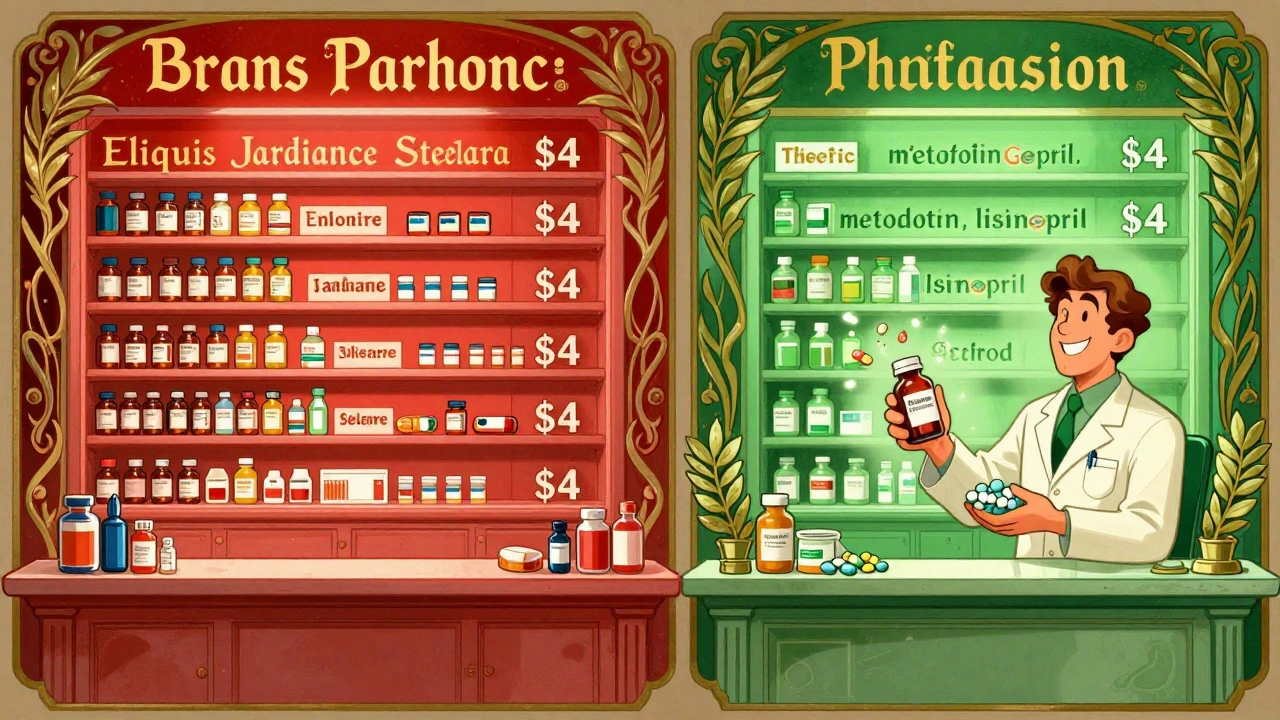
The U.S. runs two parallel systems. One for brand-name drugs. One for generics.
For brand-name drugs, there’s no price cap. Manufacturers set the list price. Then they offer discounts to PBMs, hospitals, and insurers - but those discounts rarely reach the patient at the pharmacy counter. That’s why you see $1,000 sticker prices even if the drug costs $200 to make.
For generics, it’s the opposite. There are dozens of manufacturers competing to make the same pill. That drives prices down. In the U.S., you can buy a 30-day supply of metformin for $4 at Walmart. In Germany, it’s $12. In France, $15. In Australia, $8.
This creates a strange reality: Americans pay more for the drugs they use rarely (like cancer treatments), and less for the drugs they use daily (like blood pressure meds). That’s why the University of Chicago found that when you weight prices by how often people take each drug, the U.S. actually has lower average net prices than other countries.
What’s Changing in 2025?
Medicare’s first 10 negotiated drug prices took effect in January 2025. But that’s just the start. By February 1, 2025, the government will announce the next 15 drugs up for negotiation - including more diabetes, heart, and autoimmune drugs.
These drugs were chosen because they’re expensive, widely used, and have no generic competition. The goal? To bring U.S. prices closer to international levels - not to match them, but to cut them in half.
Already, manufacturers are pushing back. Some are delaying new drug launches. Others are increasing list prices before the next negotiation round. But patients are starting to feel the difference. In states like California and New York, pharmacy chains are already displaying Medicare-negotiated prices on shelves - and many are lower than private insurance rates.
What This Means for You
If you’re on a brand-name drug like Ozempic, Jardiance, or Eliquis, your out-of-pocket cost could drop significantly in 2025 - especially if you’re on Medicare. If you’re on generics, you’re probably already paying the lowest price in the world.
But here’s the catch: if you’re uninsured or underinsured, you’re still stuck paying the full list price - which can be 5 to 10 times higher than what Medicare pays. That’s why some Americans are turning to Canada or Mexico for prescriptions. Others are splitting pills, skipping doses, or choosing between food and medicine.
There’s no easy fix. But the system is changing. And for the first time, the U.S. is starting to catch up - not by raising prices elsewhere, but by lowering them here.
Where Do You Stand?
Here’s a quick way to see where your country fits:
- Lowest prices: Japan, Australia, France
- Moderate prices: Canada, Germany, UK
- High brand prices, low generics: United States
- Unpredictable: Argentina, Lebanon, India - prices vary wildly by region and income
It’s not about who’s ‘better.’ It’s about what you value. Countries like Japan and France prioritize affordability and access. The U.S. prioritizes innovation - and pays for it through higher prices on new drugs. But that trade-off is breaking down. More people are asking: why should someone with cancer pay three times more than someone in Tokyo?
Why are drug prices so different between countries?
Drug prices vary because countries use different systems to control costs. Most use government price-setting, reference pricing (comparing prices across nations), or direct negotiation with drugmakers. The U.S. relied on private negotiations until 2022, when Medicare gained the power to negotiate prices for select high-cost drugs. Without these controls, manufacturers can set higher prices - especially for brand-name drugs with no competition.
Are generic drugs cheaper in the U.S. than elsewhere?
Yes. Generic drugs in the U.S. are typically 30-50% cheaper than in Canada, Germany, and the UK. This is because the U.S. has a highly competitive generic market with dozens of manufacturers producing the same drug. In many other countries, only one or two companies are allowed to make generics, limiting competition and keeping prices higher.
Why does Japan have the lowest drug prices?
Japan requires drugmakers to prove their new medication offers real medical benefit before it can be sold. Then, the government negotiates a price - and if the company refuses to lower it, the drug is pulled from the market. This system keeps prices low, even for cutting-edge drugs. It’s strict, but it works.
Will Medicare negotiation lower my drug costs?
If you’re on Medicare and take one of the 10 drugs negotiated in 2025, your out-of-pocket cost could drop by 50% or more. For example, Jardiance went from $204 to $52 in other countries - and Medicare’s new price is close to that. More drugs are being added each year, so if you take a high-cost brand-name drug, you’ll likely see savings soon.
Can I legally buy drugs from Canada or Mexico?
Technically, importing prescription drugs from other countries is against U.S. law - but enforcement is rare for personal use. Many Americans buy medications from Canadian pharmacies online or in person. Prices are often 50-80% lower. Some states now offer official programs to help residents access cheaper drugs from Canada. Always check with your pharmacist and ensure the source is licensed.
Do higher drug prices in the U.S. fund global innovation?
It’s a common argument, but the evidence is weak. Most new drugs are developed with public funding - from NIH grants, university research, and government labs. The U.S. pays more for brand-name drugs, but that doesn’t mean other countries are free-riding. Many countries invest heavily in research too. The real issue is how profits are distributed, not whether innovation is funded.
What Comes Next?
The next five years will decide whether the U.S. becomes more like Australia and Japan - or stays the outlier. More drugs will be added to Medicare’s negotiation list. More states will launch import programs. More patients will demand transparency.
One thing is clear: the days of paying three times more for the same pill are ending. Not because the system is fair. But because people are tired of it.
12 Comments
Genetics ain't the issue. It's the greed.
Same pill. Same factory. Different price tag. That's capitalism.
So Japan’s just like… forcing drug companies to chill? 😳
Meanwhile in the US we’re out here paying $1200 for Ozempic like it’s a luxury handbag 💸
Someone explain why we’re the only ones okay with this??
Let me just say this: I cried the first time I bought metformin for $4 at Walmart. I’ve seen friends choose between insulin and rent. This isn’t a policy debate - it’s a moral crisis.
And yeah, I know the U.S. pays less for generics, but when your kid needs a $2000 shot every month, ‘average price’ doesn’t mean jack.
I’m so tired of hearing ‘innovation’ as an excuse. Innovation doesn’t need to cost someone’s dignity.
Thank you to the people fighting for Medicare negotiation. I’m not angry anymore - I’m just done waiting.
Canada, Australia, Japan? You’re not ‘socialist.’ You’re just human.
And we’re catching up. Slowly. But we’re catching up.
I don’t even know how to feel anymore. I’m on Eliquis. I pay $180 a month. My cousin in Germany pays $112. I work two jobs. I have insurance. I still cry in the pharmacy aisle.
They say ‘it’s not about the pill, it’s about the system.’ But the system is killing people. And we’re all just… watching.
Why does it take a national crisis for someone to say ‘this is wrong’?
Ugh. Another ‘America bad’ post. Japan’s prices are low because they’re communist-lite.
We pay more because we fund the world’s R&D. You think those drugs just magically appear?
Stop whining. Go to Canada if you hate America so much.
🇺🇸 #AmericaFirst #DrugPricesAreFair
Okay but let’s be real - the U.S. isn’t even the worst. Look at India. You can buy a year’s supply of some brand-name drugs for less than $100 there - and they’re legit. No scam. No counterfeit. Just… cheaper.
Meanwhile, we’re stuck with PBMs playing 4D chess with our co-pays.
And don’t get me started on how the FDA approves generics faster than Europe. We’re efficient - just not ethical.
Also, Ozempic is $1200? I saw it for $300 on a shady Instagram pharmacy. Should I risk it? 😅
Japan’s system is brutal but fair. No one’s getting rich off a $50 pill.
Here? The same pill gets marked up 20x before it hits the shelf.
And the worst part? The people who need it most? They’re the ones getting screwed.
Medicare negotiation is the bare minimum. It should’ve happened 20 years ago.
Still, it’s a start. I’ll take it.
I think the real issue is how we talk about this. We say ‘U.S. pays more’ but don’t explain why generics are cheaper. That’s misleading.
Most people don’t realize they’re on generics - and that’s actually a win.
Maybe the story isn’t ‘America is evil’ but ‘America has two systems, and we need to fix the broken one.’
Just saying… maybe we can find common ground here.
canada pays like half of what the us does for brand names and we dont even have a national formulary like japan
we just say no and they cry and lower the price
its not magic its just not letting pharma run the show
also metformin is 12 bucks here?? what are you on?? its 8 at shoppers 😐
Wait so Japan says ‘no price cut? no drug.’
That’s wild. Imagine if a company said ‘nope, we’re not lowering it’ and the whole country just… said ‘fine, don’t sell it.’
Meanwhile in the US we’re like ‘sure, pay $1200, we’ll just bill your insurance’ 😭
Also… why is everyone acting like this is new? This has been going on for decades.
It’s not a surprise. It’s a failure.
I’ve lived in both Canada and the U.S. The difference isn’t just price - it’s dignity.
In Canada, you don’t have to explain why you can’t afford your meds. In the U.S., you’re treated like a burden.
And yes, generics are cheaper here - but when you need a brand-name drug for a chronic illness, you’re on your own.
Medicare negotiation is a step. But real reform needs to include protections for the uninsured.
And yes, I’m proud of Canada’s system. Not because we’re better - but because we chose people over profits.
It’s important to note that the U.S. doesn’t pay more because it’s ‘funding innovation’ - it pays more because it lacks any real price controls.
Public funding through NIH and universities has funded the vast majority of foundational research behind these drugs.
Meanwhile, other countries invest in R&D too - but they don’t let private companies extract monopolistic profits from public science.
So the narrative that Americans are ‘subsidizing global innovation’ is misleading at best, and exploitative at worst.
What we’re seeing now - Medicare negotiation, state import programs - is just the beginning of correcting a decades-long imbalance.
It’s not about socialism. It’s about fairness.