
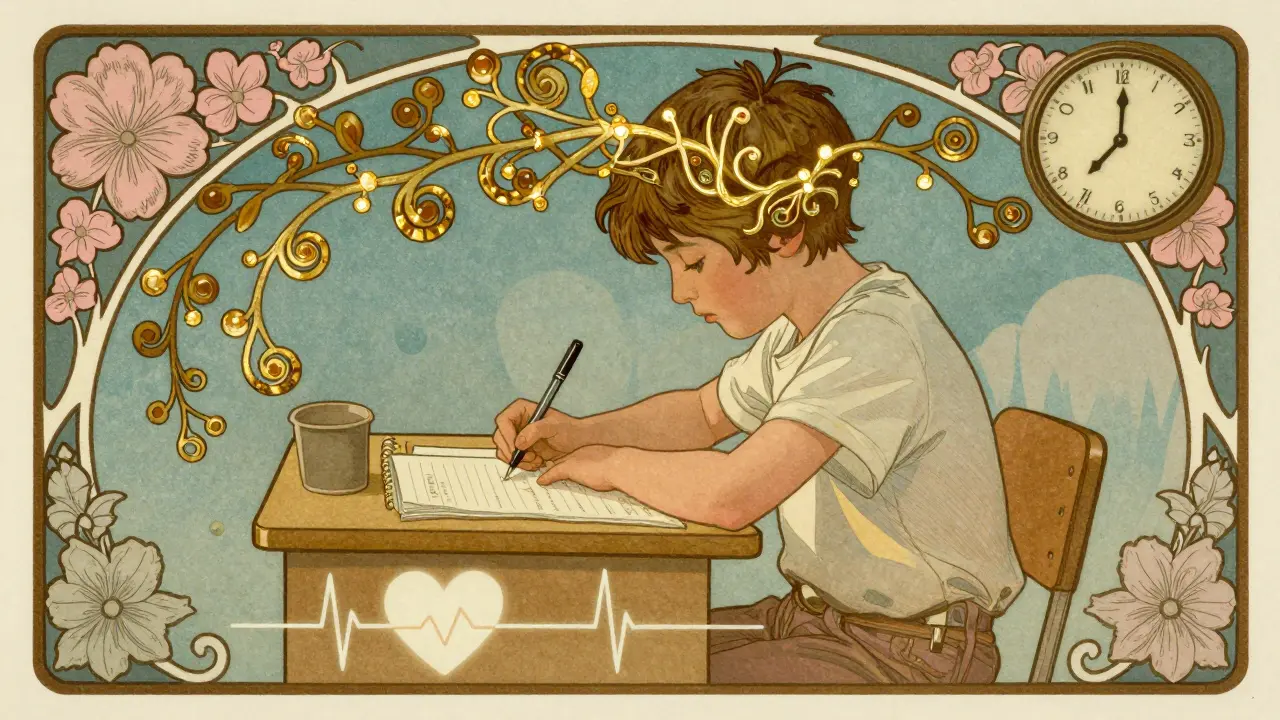
When a child or adult starts taking stimulant medication for ADHD, the goal is clear: focus improves, impulsivity drops, and daily life gets easier. But behind that improvement are real physical changes in the body-changes that aren’t always talked about. Two of the most common concerns? Cardiovascular side effects and sleep disruption. These aren’t rare or theoretical. They happen. And knowing what to expect can make all the difference in staying safe while getting the benefits.
How ADHD Stimulants Work-and What They Do to Your Heart
ADHD stimulants like methylphenidate (Ritalin, Concerta) and amphetamines (Adderall, Vyvanse) work by boosting dopamine and norepinephrine in the brain. That’s what helps with attention and self-control. But these same chemicals also act on the heart and blood vessels. The result? A measurable, consistent increase in heart rate and blood pressure. A 2025 study from the University of Southampton, the largest of its kind, analyzed data from dozens of clinical trials. It found that after weeks or months of use, stimulants raised systolic blood pressure by an average of 1 to 4 mmHg and heart rate by 1 to 2 beats per minute. That might sound small. But even tiny, sustained changes add up over time. A 10-beat-per-minute increase in heart rate is linked to a 20% higher risk of cardiac death, according to research cited in the same study. And while most people won’t feel this, their bodies are still reacting. The FDA confirmed these findings in its 2023 safety update, noting that all major ADHD medications-including non-stimulants like atomoxetine-can raise heart rate and blood pressure. That’s important: many assume only stimulants cause this. They don’t. Even non-stimulant ADHD drugs can have similar effects. The exception? Guanfacine. It actually lowers blood pressure and heart rate. Long-term risks are more serious. A 14-year study published in JAMA Psychiatry in 2024 found that people who took stimulants for ADHD had a 17% higher risk of developing cardiovascular disease-especially high blood pressure and artery problems. The risk went up with higher doses and longer use, especially in the first three years. Another 2024 study from the American College of Cardiology found that young adults on stimulants were 17% more likely to develop cardiomyopathy after one year and 57% more likely after eight years. Again, the absolute risk remains low. But it’s real.Who’s at Higher Risk?
Not everyone is affected the same way. Some people have hidden heart conditions that make them more vulnerable. That’s why doctors ask about family history-sudden cardiac death in a relative, unexplained fainting, or known heart rhythm disorders like Long QT Syndrome. People with Long QT Syndrome are a special case. Some studies suggest stimulants increase the chance of fainting or dangerous arrhythmias. Others found no events in children with LQTS who took ADHD meds. The bottom line? If you or your child has LQTS, don’t assume it’s safe or unsafe. Talk to a cardiologist. CredibleMeds.org lists most ADHD medications as “conditional risk”-meaning they can be used, but only with expert oversight. Other red flags: existing high blood pressure, chest pain, irregular heartbeat, or a history of heart attack or stroke. If any of these apply, stimulants may still be an option-but only after careful evaluation. Sometimes, switching to a non-stimulant like atomoxetine or guanfacine makes more sense.What About Sleep? It’s Not Just “Too Much Energy”
Many parents and patients think sleep problems from ADHD meds are just because the person is “too wired.” It’s more complex than that. Stimulants don’t just keep you alert-they disrupt the natural rhythm of your sleep cycle. About 30% to 50% of people starting stimulant therapy have trouble falling asleep. This isn’t always because the medication is still active. Even if the drug has worn off by bedtime, the brain’s arousal system can stay overstimulated. Extended-release formulations, meant to last all day, can sometimes cause sleep onset issues 10 to 12 hours later-especially if taken too late in the morning or at a high dose. Research shows stimulant users take 15 to 30 minutes longer on average to fall asleep compared to those on placebo. That adds up. Over weeks or months, that lost sleep impacts mood, learning, and behavior-sometimes undoing the benefits of the medication. The good news? Sleep issues often improve after a few weeks as the body adjusts. But if they don’t, there are practical fixes. Move the last dose earlier in the day. Switch from extended-release to short-acting if you can. Try melatonin-0.5 to 5 mg, taken 1 to 2 hours before bed. Some patients find it helps reset their internal clock without causing next-day grogginess. And again, non-stimulants like guanfacine can actually improve sleep. That’s a key point: not all ADHD meds are created equal when it comes to side effects.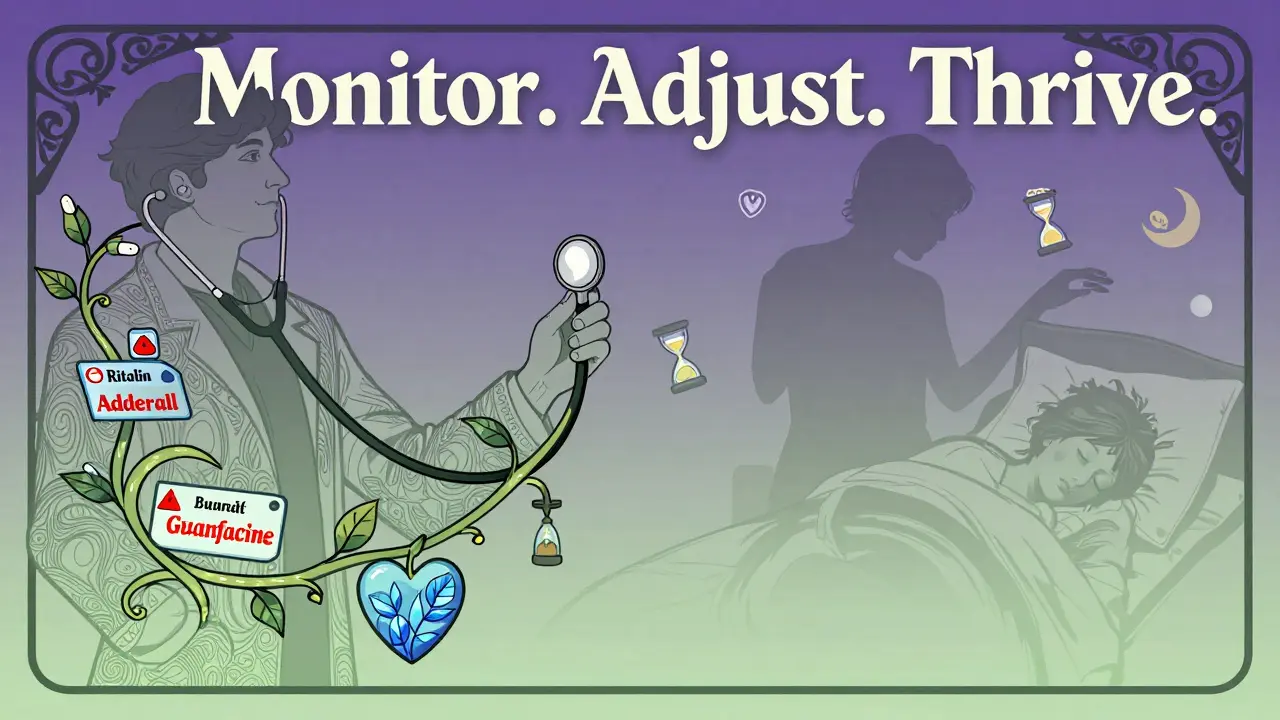
Monitoring Is Not Optional-It’s Standard Care
The American Academy of Pediatrics doesn’t recommend routine ECGs for every child before starting ADHD meds. But they do insist on baseline blood pressure and heart rate checks. That means a simple reading before the first prescription. After that, check every 3 to 6 months. If you’re on a higher dose, or have risk factors, more frequent monitoring makes sense. Don’t wait until something feels wrong. Blood pressure can creep up slowly. Heart rate can rise without symptoms. For anyone with a history of heart disease, unexplained fainting, or a family history of sudden death, a cardiology consult is wise. Even if the doctor says it’s fine, having that record matters. It’s not about fear-it’s about safety.Dosing and Timing Can Reduce Risk
Starting low and going slow isn’t just good practice-it’s protective. Begin with the lowest effective dose: 5 mg of methylphenidate, for example. Increase by 5 to 10 mg per week, watching for side effects at each step. This gives your body time to adapt and lets you catch problems early. For sleep, timing matters. Take the last dose no later than early afternoon. If you’re on an extended-release pill, ask if switching to a twice-daily short-acting version helps. Some patients do better with two smaller doses than one long one. If blood pressure stays high despite dose adjustments, talk to your doctor about adding a low-dose blood pressure medication. It’s not a failure-it’s smart management.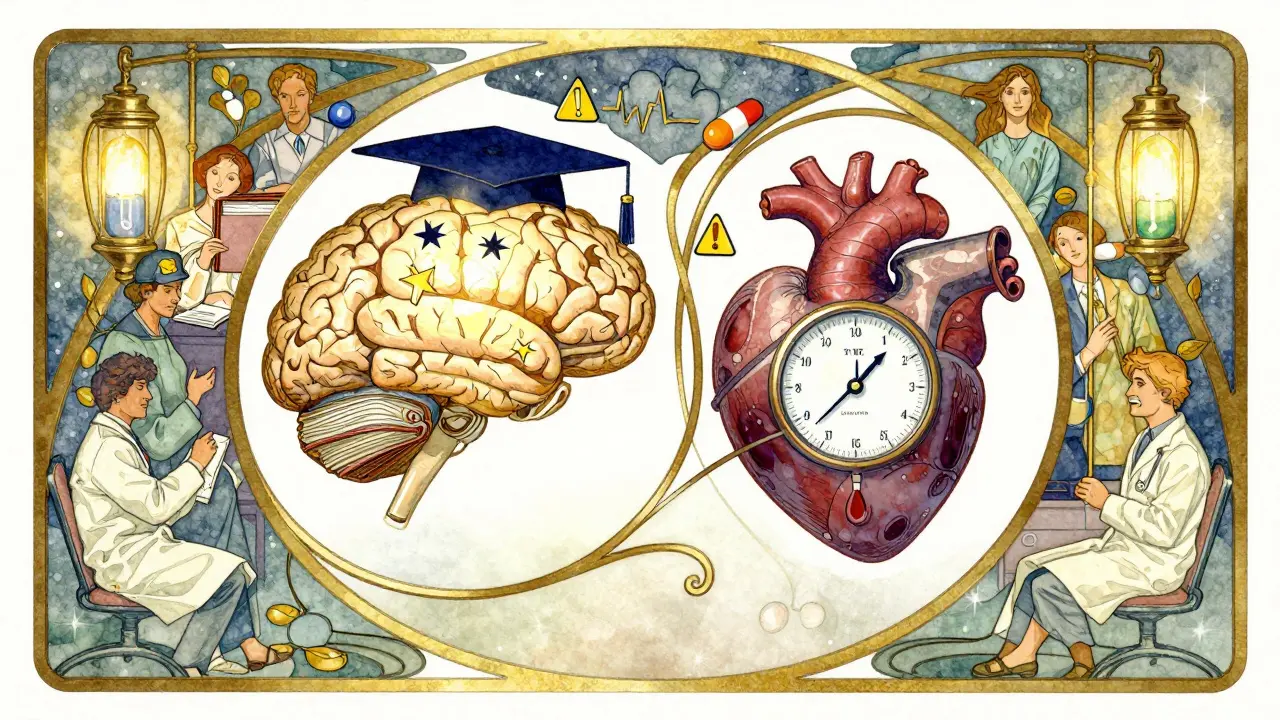
The Bigger Picture: Benefits vs. Risks
It’s easy to focus on side effects. But let’s not lose sight of the upside. ADHD, if untreated, carries its own serious risks: poor academic performance, job instability, higher rates of accidents, substance use, and even suicide. The benefits of stimulants are well-documented: 70% to 80% of people see major improvement in symptoms. The JAMA Psychiatry study found that serious cardiovascular events from stimulants are rare-so rare that you’d need to treat over 1,000 people for a year to see one serious event. That’s a number needed to harm of 1,000. Meanwhile, the number needed to benefit for improved school performance or reduced impulsivity is under 3. Most patients and families agree: the trade-off is worth it. A 2023 survey by CHADD found 78% of users rated medication effectiveness as “good” or “excellent,” even while acknowledging side effects. The goal isn’t to avoid medication. It’s to use it wisely-with awareness, monitoring, and open communication with your doctor.What to Do Next
If you’re on ADHD stimulants:- Know your baseline numbers: get your blood pressure and heart rate checked if you haven’t recently.
- Track sleep patterns. Are you taking longer to fall asleep? Are you waking up more often?
- Ask your doctor: “Is my dose the lowest that still works?”
- Ask: “Could a non-stimulant be an option if side effects persist?”
- Report any chest pain, dizziness, fainting, or irregular heartbeat immediately.
- Share your full medical history-including family heart conditions.
- Ask about alternatives like atomoxetine or guanfacine if sleep or heart concerns are top priorities.
- Don’t assume “natural” or “non-stimulant” means safer. All ADHD medications carry risks.
Final Thought
ADHD stimulants aren’t perfect. But they’re one of the most effective tools we have. The side effects-heart rate increases, sleep trouble-are real, but manageable. They’re not reasons to avoid treatment. They’re reasons to treat smarter. The science doesn’t support fear. It supports awareness. And awareness, paired with good monitoring, makes these medications safer than ever.Do ADHD stimulants cause heart damage?
ADHD stimulants don’t cause direct heart damage in most people. But they can increase heart rate and blood pressure, which over time may raise the risk of conditions like hypertension or cardiomyopathy-especially with high doses or long-term use. The absolute risk is low, but it’s real. Regular monitoring helps catch changes early.
Can I take ADHD meds if I have high blood pressure?
Yes, but with caution. If your blood pressure is already high, stimulants can make it worse. Your doctor may start you on a lower dose, switch to a non-stimulant like guanfacine or atomoxetine, or add a blood pressure medication. Regular checks are essential.
Why do ADHD meds mess up my sleep?
Stimulants increase alertness by boosting brain chemicals that keep you awake. Even after the medication wears off, your nervous system can stay overstimulated. Extended-release formulas can cause sleep issues 10-12 hours later. Moving the last dose earlier or using melatonin often helps.
Are non-stimulant ADHD meds safer for the heart?
Not always. While stimulants are more commonly linked to heart rate increases, studies show non-stimulants like atomoxetine can raise blood pressure and heart rate too. Guanfacine is the exception-it lowers both. So safety depends on the specific drug, not just whether it’s a stimulant.
Should my child get an ECG before starting ADHD medication?
Routine ECGs aren’t recommended for all children. The American Academy of Pediatrics says they’re not necessary unless there’s a personal or family history of heart problems, fainting, or sudden cardiac death. In those cases, a cardiologist should evaluate first.
Is it safe to take ADHD meds long-term?
For most people, yes. Long-term studies show that while there’s a small increased risk of cardiovascular issues over many years, the benefits-better focus, school performance, emotional regulation-usually outweigh the risks. Regular check-ups and dose adjustments keep the risk as low as possible.
What are the signs I should stop my ADHD medication?
Stop and contact your doctor immediately if you experience chest pain, shortness of breath, fainting, dizziness, palpitations, or a rapid or irregular heartbeat. These aren’t normal side effects-they’re warning signs. Don’t wait to see if they go away.
13 Comments
Been on Adderall for 8 years. My BP crept up from 118/76 to 132/84. Didn’t feel anything until my doc pointed it out. Now I check it weekly. Worth it for focus, but yeah - don’t sleep on the numbers.
THE GOVERNMENT IS USING ADHD MEDS TO MAKE US ALL HYPERTENSIVE SO WE’LL BE TOO TIRED TO PROTEST 😵💫💊 #CIAADHDCONSPIRACY
Look, I’m American and I’ve seen this before. We’re just letting Big Pharma sell us pills that turn our kids into anxious, sleep-deprived zombies. Meanwhile, in Sweden they use therapy and outdoor time. We’re not even trying. 🇺🇸😭
My daughter started on Vyvanse last year. Sleep was a nightmare at first - took 2 hours to fall asleep. We moved her dose to 8am, added 1mg melatonin, and now she’s sleeping like a baby. 🙌 It’s not perfect, but it’s manageable. You got this!
There’s a quiet irony here: we pharmacologically enhance focus to survive systems that were never designed for neurodivergent minds. The heart rate spikes? They’re not side effects - they’re the body’s quiet protest against a world that demands hyperproductivity. We treat the symptom, not the structure.
My cousin’s kid got on Ritalin at 7. Now 19, no heart issues, sleeps fine. Doc monitored every 6 months. That’s all it took. Don’t fear the med, fear the lack of follow-up.
They say 'the risk is low' - but what if you're the one? What if your kid is the one? One. Single. Case. That's all it takes to ruin a life. And now you're telling me to 'trust the system'?
It is imperative to note that the statistical analyses referenced herein are subject to selection bias and confounding variables, including but not limited to socioeconomic status, access to healthcare, and pre-existing comorbidities. The conclusion that stimulant use correlates with cardiovascular risk is not causally established and should be treated with extreme caution.
I’ve been prescribing ADHD meds for 15 years. I’ve seen more kids thrive than crash. But the ones who get lost? The ones whose parents never check BP. The ones who keep taking it ‘because it works.’ That’s the real tragedy. Not the med. The silence.
You call it 'risk' but really you're just reinforcing the capitalist machine - medicate the misfit, make them productive, then blame their body for breaking under the weight of your expectations. Wake up. The system is the disease.
Man, I been on Concerta since 2018. My heart rate up, yeah, but my GPA went from 2.1 to 3.8. My mom cried when I got my scholarship. I don't care if my BP's 130/85 - I got a future now. The doc knows, we check every 4 mos. That's all.
Medication is a tool, not a solution. The real question is not whether stimulants raise blood pressure - it’s whether our society has the moral courage to build systems that accommodate neurodiversity without chemical coercion. We treat the symptom, not the condition of the world.
India doesn't need this. We raise kids with discipline, not pills. This is a Western disease. Stop importing your problems here. Our kids don't need Adderall to focus. They need respect.