
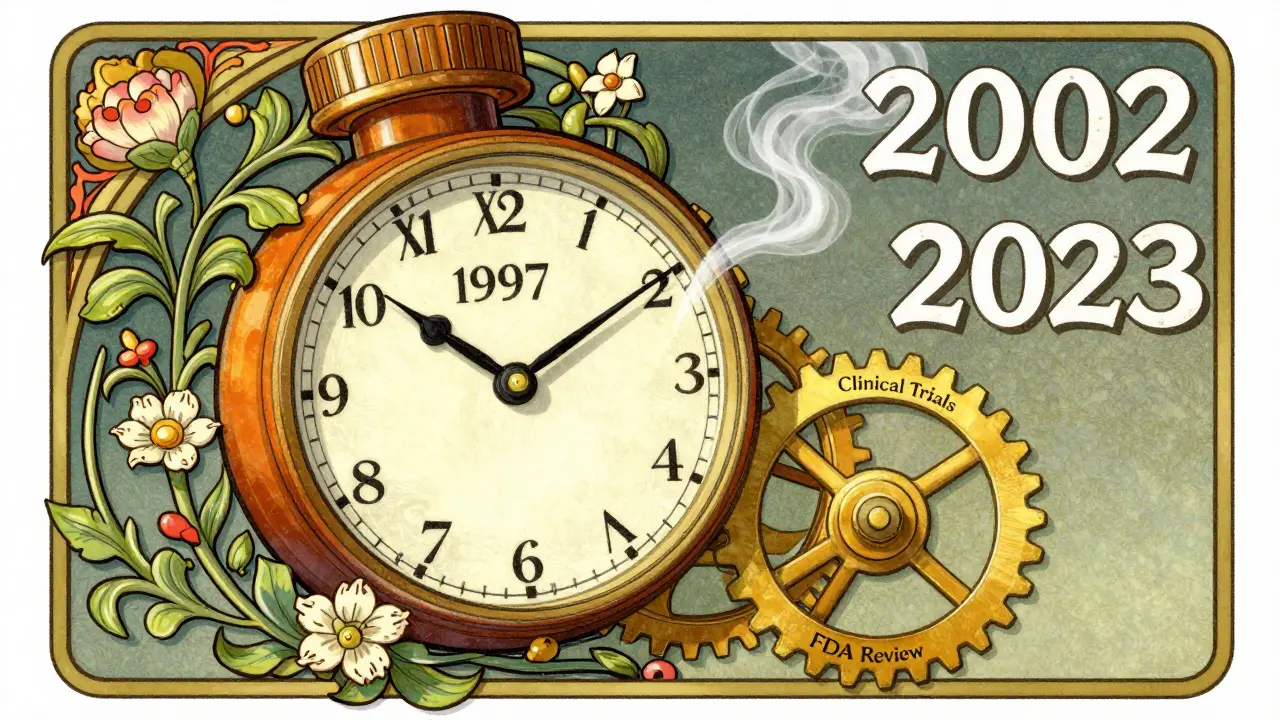
Most people think drug patents last 20 years. That’s what you hear on TV, in news headlines, even from your pharmacist. But if you’ve ever wondered why a brand-name drug still costs hundreds of dollars years after it was first approved, the answer isn’t simple. The 20-year clock doesn’t start when the drug hits the shelf-it starts when the company files the patent, often a decade before the drug even reaches patients.
The 20-Year Clock Starts Before the Drug Is Even Approved
Under U.S. law, a drug patent lasts 20 years from the earliest filing date of the patent application. That’s not when the drug is tested in humans, not when it gets FDA approval, and definitely not when it’s sold in pharmacies. It’s when the pharmaceutical company first submits the patent paperwork to the USPTO. Most companies file patents during early clinical trials, sometimes even before Phase I testing. That means by the time a drug gets approved, five to ten years of its patent life are already gone.
Take Humira, for example. The patent was filed in 1997. It got FDA approval in 2002. But the 20-year clock didn’t reset-it kept ticking. By the time the last major patent expired in 2023, nearly 26 years had passed since filing. That’s because the company layered patents: one for the active ingredient, another for the delivery device, others for how it’s used to treat rheumatoid arthritis, Crohn’s disease, and psoriasis. Each had its own 20-year term, but they all started from the same original filing date.
Patent Term Extension: The Legal Lifeline
Here’s where things get real. The Hatch-Waxman Act of 1984 gave drugmakers a way to get back some of that lost time. If the FDA took more than three years to review the drug, or if there were delays in the approval process, the company could apply for a Patent Term Extension (PTE). This can add up to five extra years of protection-but with a catch.
The total time a drug can be protected from generic competition is capped at 14 years from the date it’s approved by the FDA. So even if a company gets the full five-year extension, if the drug was approved eight years after the patent was filed, the total protection is only 14 years, not 25. That’s why some drugs expire sooner than others, even if they were filed around the same time.
And here’s the kicker: the company has just 60 days after FDA approval to apply for this extension. Miss the deadline? You lose it. No appeals. No second chances. Many smaller companies miss this window simply because they don’t have a dedicated patent team.
It’s Not Just Patents-There’s Also Regulatory Exclusivity
Even if a patent expires, that doesn’t mean generics can jump in right away. The FDA gives out separate protections called regulatory exclusivity. These are not patents-they’re legal barriers built into drug approval rules.
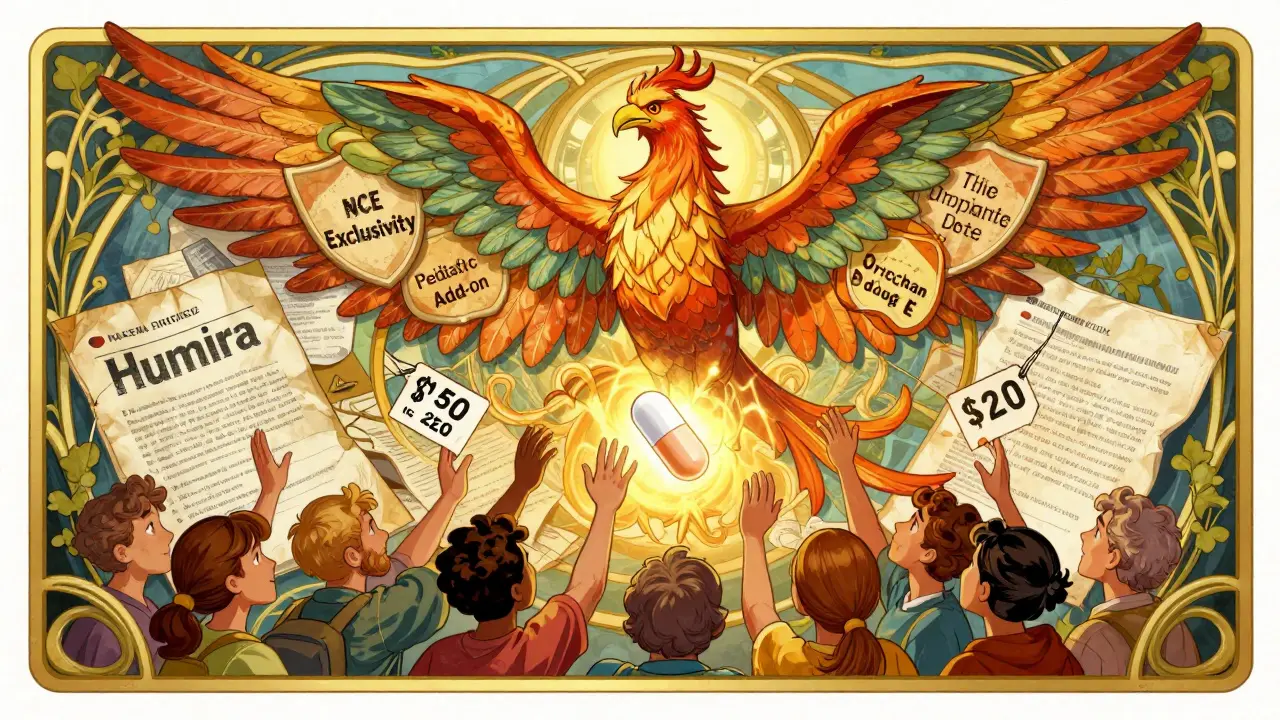
- New Chemical Entity (NCE) exclusivity: 5 years. No generic can even submit an application during this time.
- Orphan Drug Exclusivity: 7 years for drugs treating rare diseases (fewer than 200,000 U.S. patients).
- New Clinical Investigation exclusivity: 3 years for new uses, dosages, or formulations that require new clinical trials.
- Pediatric Exclusivity: 6 months added to any existing patent or exclusivity period if the company does extra studies on how the drug affects children.
That means a drug could have its patent expire in 2027, but still be protected until 2030 because of pediatric exclusivity. One patient in a Reddit thread in early 2024 shared that their insurance switched them from a brand-name drug to a generic-only to find the copay jumped from $50 to $200 during the extra 6-month pediatric window. The patent had expired, but the exclusivity hadn’t. No one told them.
The Patent Cliff: What Happens When Protection Ends
The moment the last patent or exclusivity period ends, the market shifts. That’s called the patent cliff. Generic manufacturers can finally file applications. And they do-fast.
For small molecule drugs (the kind made from chemicals), generic versions typically capture 35% of the market within six months and over 90% within 18 months. Prices drop by 60% to 80% in the first year. Eliquis, a blood thinner, lost 62% of its average wholesale price after generics entered in 2023. By 2024, it was being sold for less than $10 a month in many states.
But biologics-complex drugs made from living cells, like Humira or Enbrel-are different. Their generics are called biosimilars. They’re harder to copy, harder to approve, and slower to gain trust. Even after patent expiry, biosimilars often take 2-3 years to reach 40-60% market share. Some patients still stick with the brand because their doctors won’t switch them, or their insurance doesn’t cover the biosimilar.
How Companies Stretch Protection: Evergreening and Layering
Pharmaceutical companies don’t wait for the patent to expire. They plan years ahead. A 2023 study found that 78% of drugs with upcoming patent cliffs use some kind of lifecycle management strategy.
One common tactic is evergreening: filing new patents on minor changes-like a new pill coating, a different dosage form, or a new delivery device. The FTC found that these strategies can delay generic entry by 2-3 years on average. For example, AstraZeneca’s Tagrisso, a lung cancer drug, had its main patent expire in 2026. But it has 12 other patents covering combination therapies, dosing schedules, and manufacturing methods. Those extend protection until 2033.
Another trick? Filing patents in multiple countries. A drug might lose protection in the U.S. in 2025 but still be protected in Japan, Germany, or Brazil until 2030. That’s why some patients travel abroad to buy cheaper versions.
What’s Changing Now? New Rules and Legal Battles
In early 2024, Congress introduced a bill called the Restoring the America Invents Act. If passed, it would eliminate certain patent term adjustments, cutting average protection by 6-9 months. The USPTO is also rolling out automated systems to speed up patent reviews, which could reduce delays-and shorten PTE eligibility.
Meanwhile, the Patent Trial and Appeal Board (PTAB) is becoming a battleground. Between 2019 and 2023, 62% of pharmaceutical patents were challenged through Inter Partes Review (IPR) proceedings. Generic companies are using this faster, cheaper alternative to court to knock out patents before they expire.
And then there’s the global pressure. The World Health Organization has called for reducing patent terms to 15 years to improve access to medicines. The pharmaceutical industry, led by PhRMA, pushes back, saying the $2.3 billion average cost to develop a drug justifies the current system.
Who’s Really Affected?
It’s not just drugmakers and generics. It’s patients. It’s insurers. It’s pharmacies.
When a drug’s patent expires, prices drop. That’s good news for patients with high-deductible plans or no insurance. But if a drug has pediatric exclusivity, or if the first generic applicant gets 180 days of market exclusivity, patients might face higher costs during that window. Some insurers don’t update their formularies fast enough. Patients get stuck paying brand prices even when generics are available.
And for older adults on fixed incomes, the timing matters. A drug that costs $150 a month under patent might drop to $20 after generics arrive. But if the switch happens mid-year, and their insurance resets the deductible, they could pay thousands out of pocket before the savings kick in.
How to Find When a Drug’s Patent Expires
There’s no single public tool that gives you exact dates for every drug. But here’s what you can do:
- Check the FDA’s Orange Book-it lists all patents and exclusivity periods for approved drugs. Search by drug name.
- Use DrugPatentWatch or Clarivate’s Cortellis (both are industry tools, often accessible through libraries or hospitals).
- Call your pharmacy and ask if they have a generic version available. If not, ask why.
- Look up the drug’s FDA approval date. Add 5 years for NCE exclusivity. Then check if there’s pediatric or orphan exclusivity.
Most people don’t know this, but the FDA requires drugmakers to update patent information within 30 days of approval. If the Orange Book doesn’t match what your pharmacist says, ask for a copy of the official filing.
What’s Next?
The next five years will see over $268 billion in revenue lost to patent expirations, with 2025 being the peak year. Drugs like Copaxone, Xarelto, and Trulicity are all on the list. If you’re on one of these, prepare. Talk to your doctor. Ask about generics. Check your insurance plan’s formulary. Don’t assume the brand is still the only option.
Patents aren’t just legal documents-they’re financial timelines that affect your wallet, your health, and your access to care. Understanding them isn’t just for lawyers or CEOs. It’s for anyone who takes medication.
Do all drug patents expire after exactly 20 years?
No. The 20-year term starts from the patent filing date, not the approval date. Most drugs lose 5-10 years of protection during clinical trials. Some get extensions through the Hatch-Waxman Act, up to 5 extra years, but total market protection is capped at 14 years from FDA approval. Other protections like regulatory exclusivity can delay generics even after the patent expires.
Can a drug still be protected after its patent expires?
Yes. Even if a patent expires, regulatory exclusivity can block generics. For example, a New Chemical Entity gets 5 years of exclusivity, meaning the FDA won’t accept any generic application during that time. Pediatric exclusivity adds 6 months to any existing protection. Orphan drug exclusivity lasts 7 years. These are separate from patents and are enforced by the FDA, not the USPTO.
Why do some generic drugs cost more than the brand name?
It’s usually because the brand still has exclusivity protection-even if the patent expired. For example, if a drug has pediatric exclusivity, the FDA won’t approve generics until that period ends. During that time, the brand may still be the only option. Insurance plans sometimes don’t update their formularies fast, so patients end up paying the brand price. Also, some biosimilars (generic biologics) are priced higher because they’re more complex to produce.
What’s the difference between a patent and regulatory exclusivity?
A patent is a legal right granted by the USPTO to prevent others from making, using, or selling the drug. It’s based on invention. Regulatory exclusivity is a government incentive from the FDA that blocks generic approval for a set time, regardless of patents. It’s based on the effort of testing and approval. One can expire while the other remains active.
How do I know if a generic version of my drug is available?
Check the FDA’s Orange Book online or ask your pharmacist for the latest status. If your drug’s patent and all exclusivity periods have expired, generics should be available. But sometimes insurance companies delay switching. Ask your doctor to write a prescription for the generic, and call your insurer to confirm coverage. If the generic isn’t on the formulary, request a formulary exception.
Are there any drugs that never get generics?
Some drugs don’t have generics because they’re too complex to copy-like biologics (e.g., Humira, Enbrel). Their copies are called biosimilars, and they take longer to develop and approve. Also, if a drug has very low sales volume, generic companies may not see enough profit to justify the cost of approval. In rare cases, companies use legal tactics to delay generics, like filing dozens of weak patents or suing generic applicants to trigger a 30-month stay.
12 Comments
Holy crap, I had no idea the clock started ticking before the drug even hit the market. My insulin costs $300 a month and I just assumed the company was being greedy. Turns out they’ve been fighting for every second of protection since the 90s. 😅
The distinction between patent expiration and regulatory exclusivity is critically important, yet consistently misunderstood by the public. Many assume that once a patent lapses, generics become immediately available; this is not the case.
It’s wild how the system is designed to balance innovation and access, but the gaps between intent and reality are so wide. Companies aren’t evil for protecting their investment - but patients shouldn’t have to gamble with their health because of legal loopholes.
so like... if i take a drug that's 'protected' by pediatric exclusivity but the patent's dead, and my insurance still charges me brand price... is that just them being lazy or is this some kinda scam? 🤔
BIG PHARMA IS LYING TO YOU. THEY FILE 50 PATENTS ON THE SAME DRUG JUST TO KEEP YOU PAYING $500 A MONTH. THEY DON’T CARE IF YOU DIE. THEY JUST WANT YOUR CREDIT CARD. #EXPOSEBIGPHARMA
in india we get generics for 10 rupees but here people pay 1000 dollars why is this so unfair
The regulatory framework governing pharmaceutical intellectual property is an intricate balance between incentivizing innovation and ensuring equitable access to essential therapeutics. The current system, while imperfect, remains a necessary mechanism to sustain R&D investment in life-saving modalities.
America invented modern medicine. We fund the research. Why should India or Nigeria get cheap generics while we pay the price? If you want cheap drugs, move to a country that doesn’t value innovation.
THIS IS WHY YOU NEED TO KNOW YOUR DRUGS! 🚨 If your insurance just switched you to a generic and your copay went up - it’s probably because of pediatric exclusivity. Call your pharmacy. Ask for the Orange Book. Don’t let them gaslight you. You’re not crazy - the system is broken. 💪
The system is messy but it’s not magic. Companies stretch patents. Regulators allow it. Patients pay. It’s just how it works. Nothing to get mad about - just be informed.
Of course the patent system is rigged. The same people who wrote the laws also own the pharma companies. You think this is about science? Nah. It’s about who controls the money. And you? You’re just a line item.
I just checked my copay for my dad’s blood pressure med - $200. Called the pharmacy. Turns out the patent expired last month but the insurer hasn’t updated it yet. Called my insurance. They said ‘we’re processing it.’ Bro. I’ve been paying $200 for a $12 generic since January. 🤦♂️