
Statins Muscle Pain Risk Calculator
This tool helps you understand your risk of muscle pain based on which statin you're taking or considering. According to clinical studies, most muscle pain from statins is actually due to the nocebo effect.
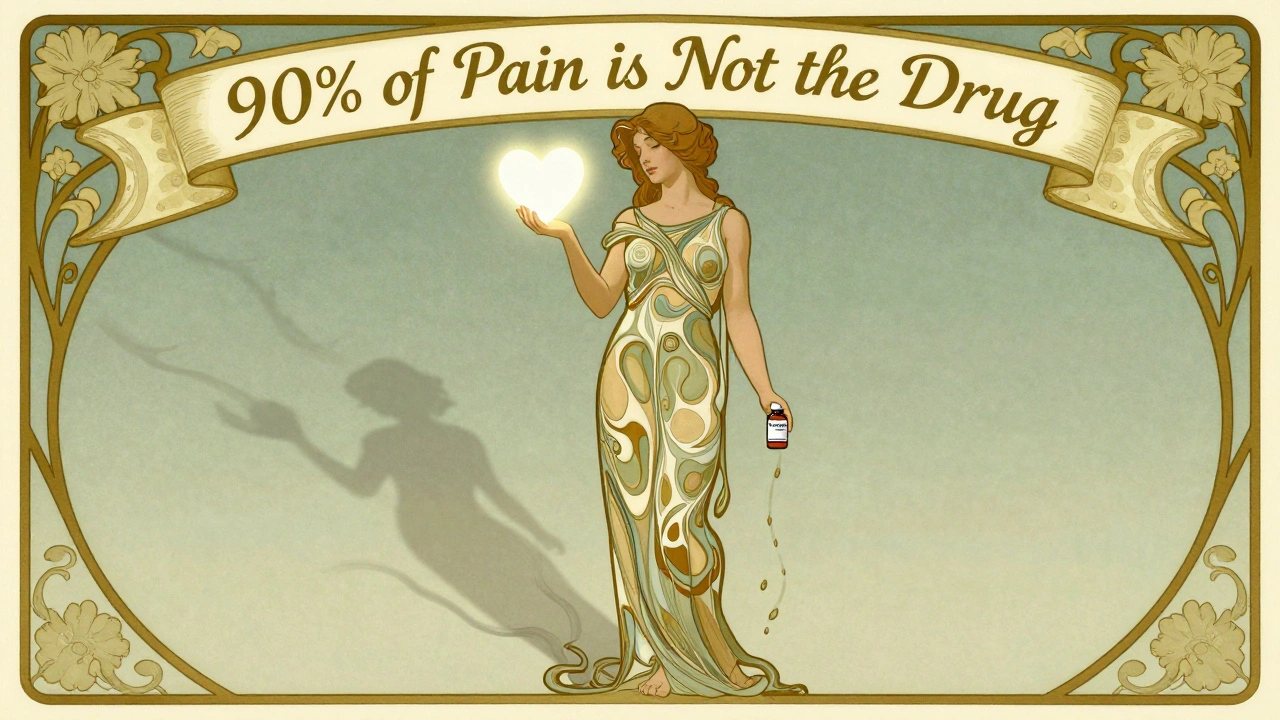
Based on the 2022 Lancet study tracking over 120,000 people: 90% of muscle pain reported during the first year of statin use has nothing to do with the medication.
More than 30 million Americans take statins to lower cholesterol and protect their hearts. But for many, the fear of muscle pain keeps them from sticking with the medication-even when it’s working. The truth? Most of that pain isn’t actually caused by the drug.
Statins and Muscle Pain: The Big Misunderstanding
If you’ve ever stopped taking a statin because your legs felt sore or your shoulders ached, you’re not alone. But here’s what most people don’t know: according to a massive 2022 study in The Lancet that tracked over 120,000 people, 90% of muscle pain reported during the first year of statin use has nothing to do with the medication. That study compared people taking statins to those taking a sugar pill. The numbers? 27.1% of statin users reported muscle pain. So did 26.6% of people on placebo. That’s a difference of just 0.5 percentage points. In practical terms, for every 1,000 people taking a statin, only about 11 extra cases of muscle pain were linked to the drug in the first year. For most, it’s not the statin-it’s the expectation. This is called the nocebo effect. If you’ve heard stories about statins causing muscle pain, your brain starts looking for it. You feel a twinge after walking the dog, and suddenly it’s the pill. But when researchers did blind tests-where patients didn’t know if they were taking the real drug or a placebo-many found their symptoms showed up equally on both. That’s not coincidence. It’s psychology.Not All Statins Are Created Equal
Even though most muscle pain isn’t caused by statins, some are more likely to trigger real issues than others. It comes down to chemistry: how the drug is absorbed, how strong it is, and whether it’s fat-soluble. Here’s the ranking from highest to lowest risk of muscle pain, based on clinical data from the SUNY NYPEP report and multiple meta-analyses:- Simvastatin - Highest risk. Odds ratio of 1.78 compared to pravastatin. Often prescribed at higher doses (40-80 mg), which increases muscle exposure.
- Atorvastatin - Moderate risk. Strong cholesterol-lowering power, but more likely to cause symptoms than pravastatin or fluvastatin.
- Rosuvastatin - Slightly higher risk than pravastatin. Potent, but less lipophilic than simvastatin or atorvastatin.
- Pravastatin - Low risk. Water-soluble, less likely to penetrate muscle tissue.
- Fluvastatin - Lowest risk. Weakest statin in terms of cholesterol reduction, but also the safest for muscles.
Real Patient Stories: What Works
Take the Reddit thread from March 2023. One user, CardioPatient87, stopped simvastatin after three months because of severe leg cramps. His doctor switched him to pravastatin. He’s been symptom-free for 18 months. Another user, StatinsSaveLives, did a blind challenge with their cardiologist. Neither knew if they were taking atorvastatin or a placebo. The muscle pain happened just as often on the sugar pill. They realized their body wasn’t reacting to the drug-it was reacting to fear. These aren’t rare cases. On Drugs.com, simvastatin has a muscle pain rating of 3.2 out of 5 based on nearly 3,000 reviews. Atorvastatin is at 2.9. But pravastatin? 2.5. Fluvastatin? 2.3. The pattern matches the science.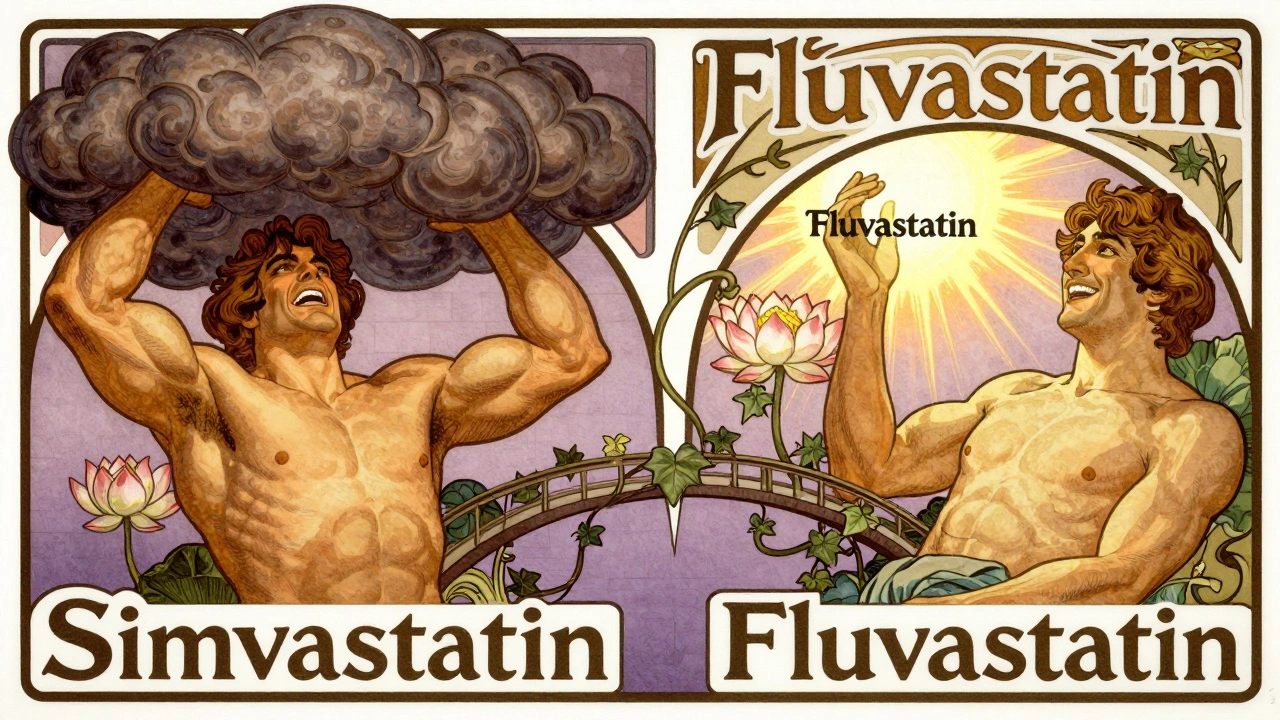
What to Do If You Have Muscle Pain
Don’t quit statins on your own. Here’s what actually works:- Don’t assume it’s the statin. Muscle pain happens for lots of reasons-aging, overuse, vitamin D deficiency, thyroid issues. Rule those out first.
- Try a statin holiday. Stop the medication for 2-4 weeks under your doctor’s supervision. If the pain goes away, restart it. If it comes back, it’s likely related.
- Switch to a lower-risk statin. If you were on simvastatin, try pravastatin or fluvastatin. Both are just as effective at preventing heart attacks, but much gentler on muscles.
- Lower the dose. Sometimes, cutting the dose in half reduces side effects without losing benefit. For example, 10 mg of atorvastatin works almost as well as 40 mg for many people.
- Try every-other-day dosing. Some statins, like rosuvastatin and atorvastatin, have long half-lives. Taking them every other day can reduce muscle exposure while keeping LDL low.
When Muscle Pain Is Real (and Dangerous)
Most muscle pain from statins is mild. But there’s a rare, serious condition called rhabdomyolysis-where muscle tissue breaks down and can damage your kidneys. It’s extremely uncommon: less than 1 in 10,000 people per year on statins. Watch for these red flags:- Severe muscle pain or weakness that doesn’t go away
- Dark, tea-colored urine
- Fever or fatigue along with muscle pain

What If You Can’t Tolerate Any Statin?
About 1 in 5 people stop statins because of muscle pain. But most of them could actually tolerate a different one. A 2023 Mayo Clinic study showed that 68% of patients who quit statins due to muscle pain were able to restart therapy after a structured program that included education and gradual dose increases. If you truly can’t take any statin, there are alternatives:- Ezetimibe - Blocks cholesterol absorption in the gut. Lowers LDL by 15-20%. Costs about $20/month.
- PCSK9 inhibitors - Injectables like evolocumab and alirocumab. Lower LDL by 50-60%. But they cost over $5,800 a year.
- Bempedoic acid - New oral pill that works like a statin but doesn’t enter muscle cells. Reduces LDL by 20-30%.
Why This Matters More Than You Think
Statins prevent about 500,000 heart attacks and strokes in the U.S. every year. That’s half a million people who live longer, healthier lives because they took a daily pill. Yet, because of misinformation and fear, nearly 20% of new users quit within a year. Many never talk to their doctor. They just stop. The science is clear: the risk of muscle pain from statins is tiny. The benefit is huge. If you’re worried, don’t guess. Get tested. Try a different statin. Talk to your doctor. Your heart doesn’t care about your fears. It only cares if you keep taking the medicine that keeps it safe.Do all statins cause muscle pain?
No. Muscle pain is rare and often not caused by statins at all. Studies show that over 90% of reported muscle pain during the first year of statin use happens just as often in people taking a placebo. Among statins, simvastatin has the highest risk, while fluvastatin and pravastatin have the lowest.
Which statin is least likely to cause muscle pain?
Fluvastatin and pravastatin are the least likely to cause muscle pain. Both are water-soluble, meaning they don’t penetrate muscle tissue as easily as fat-soluble statins like simvastatin or atorvastatin. Clinical studies consistently show lower rates of muscle symptoms with these two.
Can I switch statins if I have muscle pain?
Yes, and it’s often the best solution. Many people who stop statins due to muscle pain can successfully switch to a lower-risk option like pravastatin or fluvastatin. A 2023 Mayo Clinic study found that 68% of patients who restarted statins after a structured plan had no further issues.
Is muscle pain from statins permanent?
No. If muscle pain is caused by a statin, it typically goes away within days or weeks after stopping the drug. In rare cases of rhabdomyolysis, recovery takes longer and may require medical treatment, but permanent damage is extremely uncommon.
Should I get my creatine kinase (CK) levels checked?
Only if you have severe, persistent muscle pain, weakness, or dark urine. For mild, common aches, CK testing isn’t helpful-it’s usually normal. Doctors use CK to rule out rhabdomyolysis, not to confirm routine muscle discomfort.
Are there genetic tests for statin intolerance?
Yes. A variation in the SLCO1B1 gene increases the risk of muscle side effects, especially with simvastatin. But this gene variant affects fewer than 3% of people. Testing isn’t routine, but it may be considered if you’ve had severe reactions to multiple statins.
Can I take statins every other day?
For some statins like rosuvastatin and atorvastatin, yes. Because they stay active in the body for days, taking them every other day can reduce muscle exposure while still lowering cholesterol effectively. This approach works for about 30-40% of people who can’t tolerate daily dosing.
Why do doctors still prescribe simvastatin if it has the highest risk?
Because it’s cheap and effective. Simvastatin is available as a generic, often costing under $5 a month. For patients with no history of muscle issues, it’s a cost-effective option. The key is matching the right statin to the right person-not avoiding all statins because of fear.
What’s the best way to restart a statin after stopping?
Start low and go slow. Begin with the lowest dose of a low-risk statin (like pravastatin 10 mg) and increase gradually over weeks. Educate yourself on the nocebo effect-knowing that most pain isn’t from the drug helps reduce anxiety. Studies show this approach works for the majority of people.
Is it safe to stop statins if I have muscle pain?
Only under medical supervision. Stopping statins without a plan increases your risk of heart attack or stroke. If you’re having symptoms, talk to your doctor first. In most cases, switching statins or adjusting the dose is safer than quitting altogether.
Statins save lives. Muscle pain? Mostly noise. Don’t let fear make the decision for you.
12 Comments
Been on atorvastatin for 5 years. Started feeling weird leg fatigue last winter. Thought it was the statin, quit cold turkey. Turns out I was just dehydrated and low on magnesium. Started drinking more water, took a supplement, and the ‘pain’ vanished. Turns out my brain was just looking for an excuse to stop taking pills.
Simvastatin turned my legs into rubber bands. 😫 Switched to pravastatin - zero issues. My cardiologist said ‘it’s not the drug, it’s the vibe’ and I was like… wow, that’s actually accurate. 🙌
As someone who’s spent years counseling patients on cardiovascular risk, I can’t stress this enough: the nocebo effect is one of the most underdiagnosed phenomena in primary care. Patients are bombarded with anecdotal horror stories on social media - often from people who never even got their CK levels checked. The data is clear, but fear doesn’t care about statistics. Education and gentle re-challenge protocols are the real keys to adherence.
It’s fascinating how the human mind will latch onto a narrative - especially when it’s wrapped in the comforting cloak of ‘I know what’s wrong with me.’ I’ve had patients swear up and down that simvastatin gave them muscle pain, only to find out they’d started a new yoga routine, or were carrying groceries differently, or had recently developed early-stage hypothyroidism. The statin becomes the convenient villain, but the real story is far more complex - and often, far more manageable.
The pharmacokinetic distinctions between lipophilic and hydrophilic statins are critical in understanding differential myotoxicity. Simvastatin’s high lipophilicity facilitates passive diffusion into skeletal muscle membranes, increasing intracellular concentration and mitochondrial disruption potential. Conversely, pravastatin’s hydrophilicity limits tissue penetration via OATP1B1 transporters, reducing myocyte exposure. This biochemical framework explains the clinical hierarchy observed in meta-analyses - and underscores why genotype-guided prescribing (e.g., SLCO1B1 testing) remains underutilized despite robust evidence.
People these days are too soft. I worked construction for 30 years, never took a statin, never had pain. Now everyone’s crying because their thighs feel a little tired after walking to the fridge. Take your medicine like a man.
lol statins are just big pharma’s way of making you pay for anxiety. I stopped mine and my cholesterol went up 10 points. So what? I’m alive and not on a drug treadmill. 😎
In India, we see this every day - patients stop statins because a neighbor’s cousin had ‘muscle problems.’ But here’s the truth: in our rural clinics, we often find vitamin D deficiency, thyroid dysfunction, or even undiagnosed diabetes causing the symptoms. We don’t blame the statin. We investigate. And then we fix the real issue. This isn’t just Western medicine - it’s common sense.
I had the exact experience as CardioPatient87. Took simvastatin for 6 months, constant calf cramps. Thought I was doomed to stop forever. Switched to pravastatin 20mg - zero issues. And I’ve been on it for 3 years now. The difference wasn’t just physical - it was mental. I stopped dreading the pill. That’s the real win.
It is imperative to underscore that the risk-benefit calculus of statin therapy remains overwhelmingly favorable across all major cardiovascular risk strata. While muscle-related adverse events are frequently reported, their causal attribution remains statistically insignificant in blinded trials. The persistence of misinformation in public discourse represents a significant public health challenge, necessitating enhanced physician-patient communication and evidence-based patient education initiatives.
90%? That’s a nice number. But what about the 10%? And what about the 30% of people who just… give up? You’re talking science. I’m talking about real people who feel like garbage and can’t walk their dog. You don’t get to say ‘it’s all in your head’ to someone who’s in pain. The science is great - but compassion matters too.
WHO FUNDED THAT LANCET STUDY??!!?? The pharmaceutical companies that make statins!! And why is simvastatin still sold?? Because it’s CHEAP!! They don’t care if you hurt - they care about the bottom line!! You think they’d let you switch to fluvastatin if it wasn’t cheaper to make?? NO!! THEY’RE KEEPING YOU IN PAIN TO MAKE MONEY!!