
Absolute Risk: What It Means and How It Impacts Your Health Decisions
When you hear that a drug increases your risk of a heart problem by 50%, it sounds scary—until you learn that the absolute risk, the actual probability of an event happening in a specific group over time went from 2 in 1,000 to 3 in 1,000. That’s not a crisis. That’s a tiny change. Absolute risk tells you the real chance of something happening to you, not just how much bigger it looks compared to someone else’s risk. It’s the number that actually matters when you’re deciding whether to take a pill, change your diet, or get a test.
Most headlines and even some doctors talk about relative risk, how much more likely an event is in one group versus another. That’s why you see phrases like "doubles your risk"—but if your baseline risk was 0.1%, doubling it still leaves you at 0.2%. Meanwhile, drug safety studies rely on absolute risk to decide if a side effect is common enough to warn about. For example, in the post about torsades de pointes, the absolute risk of this deadly rhythm from QT-prolonging drugs is under 1 in 1,000 for most people. That’s why doctors don’t avoid these meds entirely—they weigh the benefit against that small but real chance. The same goes for opioids in kidney failure, where absolute risk guides which drugs are safe enough to use, even with damaged kidneys.
Understanding absolute risk helps you cut through fear and focus on what’s truly relevant. If a medication lowers your absolute risk of stroke from 5% to 4% over ten years, that’s a 20% relative reduction—but only a 1% absolute drop. Is that worth daily pills and potential side effects? Only you, with the right numbers, can say. That’s why posts on this site don’t just say "this drug works"—they show you the actual numbers behind it. You’ll find real examples: how vilazodone causes diarrhea in 3 out of 10 people, how codeine overdose risk spikes in certain genetic types, how DASH diet cuts blood pressure by measurable, real-world percentages. These aren’t guesses. They’re facts. And they’re the only way to make smart, calm choices about your health.
Below, you’ll find detailed, no-fluff guides that break down the real numbers behind medications, side effects, and treatment outcomes—so you know exactly what you’re signing up for.
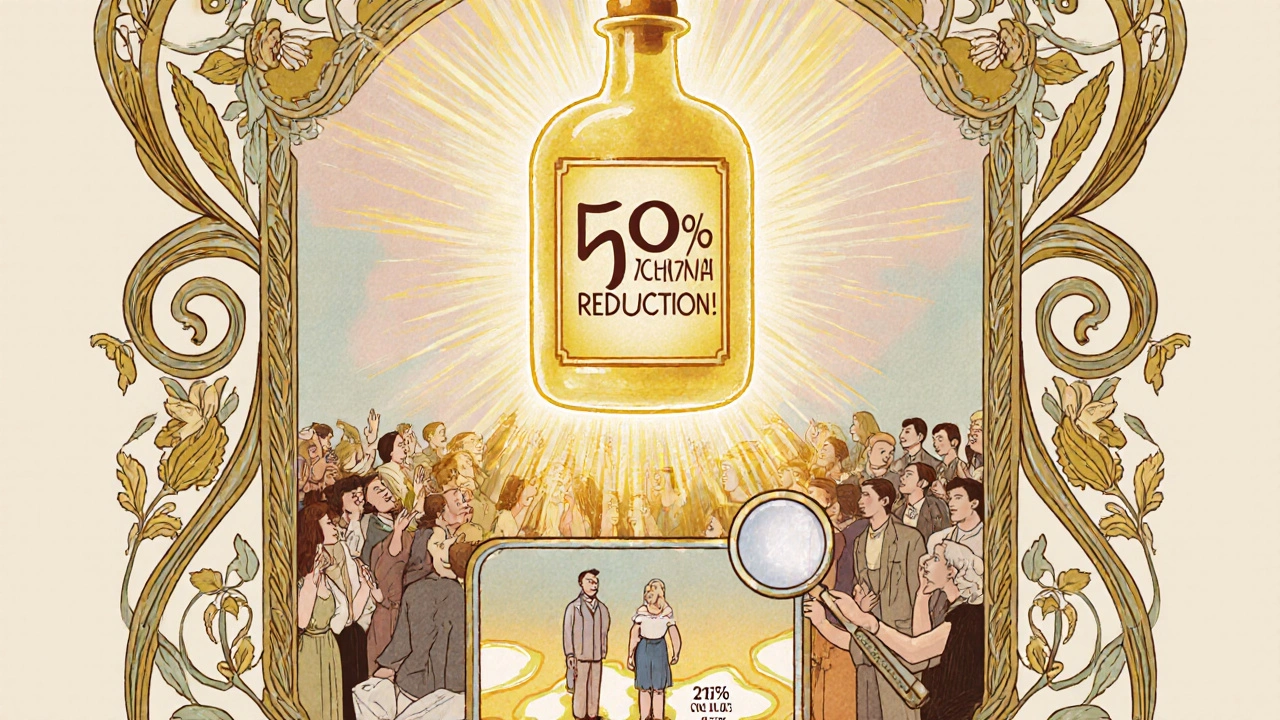
Absolute Risk vs Relative Risk in Drug Side Effects: How to Interpret Numbers
Learn how to tell the difference between absolute and relative risk in drug side effects. Understand what those percentages really mean for your health-and why pharmaceutical ads often hide the truth.