
Pharmaceutical Patents: How Patent Laws Shape Drug Prices and Access
When you hear pharmaceutical patents, legal protections that give drug companies exclusive rights to sell a medicine for a set time. Also known as drug patents, they're the reason brand-name pills cost hundreds of dollars—until they don't. These patents aren't just about innovation; they're a financial engine that determines whether a life-saving drug stays out of reach or becomes a cheap generic.
Behind every generic drug you buy is a battle fought in courtrooms and Congress. The Hatch-Waxman Act, a 1984 U.S. law that balanced patent protection with generic competition created the pathway for generics to enter the market faster and cheaper. It let companies challenge weak patents and file abbreviated applications, saving the U.S. healthcare system over $1.7 trillion. But it also gave drugmakers a loophole: patent term restoration, a way to extend patents to make up for delays in FDA approval. That extension can add years to exclusivity, keeping prices high even after the original patent expires.
It's not just about timing—it's about strategy. Companies file dozens of secondary patents on things like pill coatings, dosing schedules, or delivery methods, creating what's called a "patent thicket." This makes it harder and more expensive for generics to enter, even when the main patent is gone. The FDA Orange Book, the official list of approved drug products with patent and exclusivity information is the playbook everyone follows—brand names list their patents, generics challenge them, and the courts decide who wins.
These rules directly impact your wallet. A drug that should be cheap after 20 years of protection might stay expensive for 25 or 30 because of patent extensions and legal maneuvers. And while the Hatch-Waxman Act was meant to increase access, its complexity means many patients still face surprise price spikes when generics suddenly disappear from the market—often due to consolidation among manufacturers.
What you’ll find below is a collection of real-world stories and breakdowns of how these systems play out. From how patent extensions delay generic competition, to how state laws let pharmacists swap brands for generics, to why some drugs still cost a fortune even after their patent expires—these articles cut through the legal jargon and show you exactly how pharmaceutical patents affect your prescriptions, your costs, and your health.
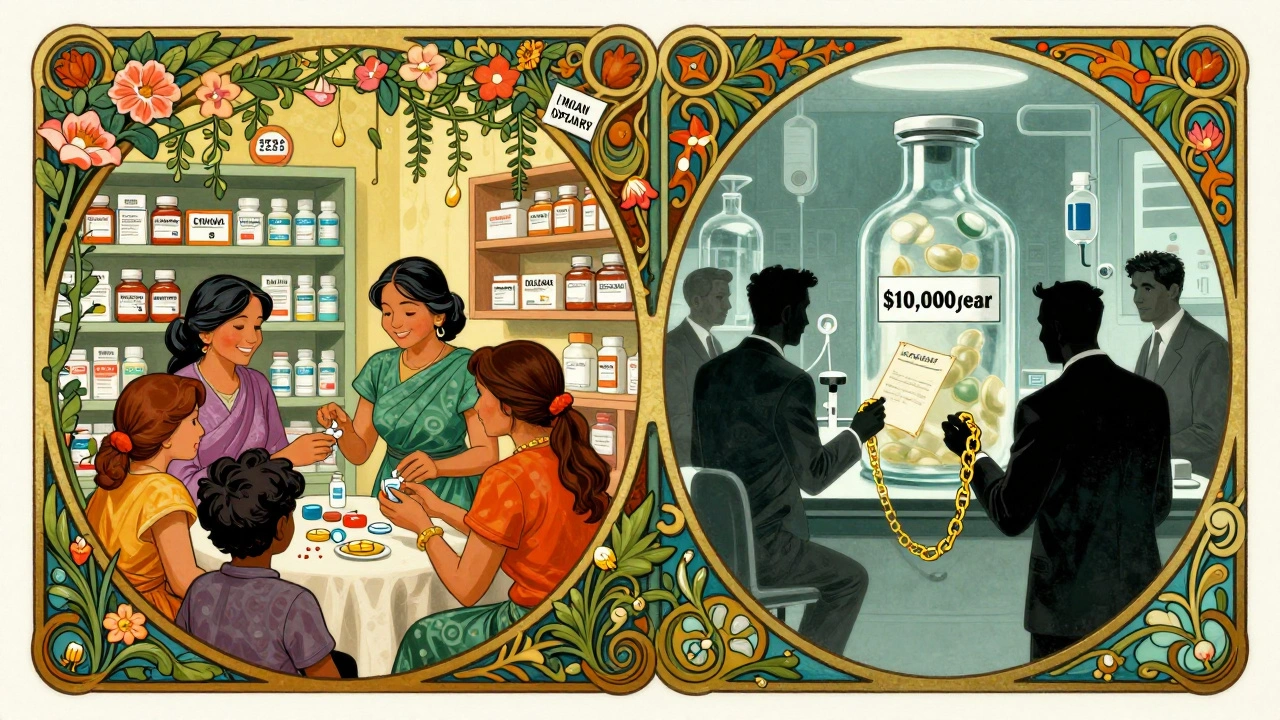
How TRIPS Agreement Shapes Global Access to Generic Medicines
The TRIPS Agreement reshaped global access to generic medicines by enforcing strict patent rules that raised drug prices and delayed affordable treatments. While it protects pharmaceutical innovation, it has cost lives in low-income countries.